
EU AI Act vs ISO 21001
EU AI Act
EU regulation for risk-based AI governance
ISO 21001
International standard for educational organizations management systems
Quick Verdict
EU AI Act mandates risk-based compliance for AI systems EU-wide, enforcing safety via fines up to 7% turnover. ISO 21001 voluntarily certifies educational management for learner outcomes. Organizations adopt AI Act for legal market access, ISO 21001 for quality excellence.
EU AI Act
Regulation (EU) 2024/1689 on Artificial Intelligence
Key Features
- Risk-based classification into four tiers
- Prohibits unacceptable-risk AI practices outright
- Mandates conformity assessment for high-risk systems
- Imposes obligations on general-purpose AI models
- Requires CE marking and EU registration
ISO 21001
ISO 21001: Educational organizations — Management systems
Key Features
- Learner-centered focus and beneficiary satisfaction
- Structured curriculum design and development
- Risk-based planning with PDCA cycle
- Learner data protection and transparency
- Annex SL alignment for system integration
Detailed Analysis
A comprehensive look at the specific requirements, scope, and impact of each standard.
EU AI Act Details
What It Is
Regulation (EU) 2024/1689, the EU AI Act, is a comprehensive horizontal regulation establishing harmonized rules for AI systems. It adopts a risk-based approach, prohibiting unacceptable risks, regulating high-risk systems, imposing transparency for limited-risk, and minimally regulating others. Scope covers providers, deployers, and value chain actors across sectors, with extraterritorial reach.
Key Components
- Prohibited practices (Article 5), high-risk requirements (Articles 9-15: risk management, data governance, documentation, oversight, cybersecurity).
- GPAI obligations (Chapter V) including systemic risk assessments.
- Conformity assessment, CE marking, EU database registration.
- Built on safety, transparency, fairness; enforced via hybrid governance (AI Office, national authorities).
Why Organizations Use It
Mandatory for EU market access; fines up to 7% global turnover deter non-compliance. Enhances trust, reduces risks in high-stakes sectors like employment, healthcare. Provides competitive edge via certified safety, aligns with GDPR/NIS2.
Implementation Overview
Phased rollout (6-36 months); inventory AI assets, classify risks, build compliance systems (QMS, RMS), conduct assessments. Applies to all sizes targeting EU; requires audits, post-market monitoring.
ISO 21001 Details
What It Is
ISO 21001 is the international management system standard titled Educational organizations — Management systems for educational organizations (EOMS) — Requirements with guidance for use. It provides certifiable requirements for organizations delivering education via curriculum-based competence development. The primary purpose is enhancing learner satisfaction and outcomes through PDCA cycle, risk-based thinking, and Annex SL high-level structure, applicable to schools, universities, vocational providers, and corporate training.
Key Components
- Clauses 4–10: context, leadership, planning, support, operations, performance evaluation, improvement
- 11 principles: learner focus, accessibility, equity, ethical conduct, data protection
- Education-specific: curriculum design (8.3), delivery controls (8.5), assessment validation
- Voluntary certification via accredited audits
Why Organizations Use It
- Improves learner retention, outcomes, efficiency
- Builds stakeholder trust, regulatory alignment
- Manages risks in digital/inclusive education
- Provides competitive differentiation, SDG 4 alignment
Implementation Overview
- Phased: gap analysis, process mapping, training, pilots, audits
- Suits all sizes/types globally
- Stage 1/2 certification, annual surveillance (180 words)
Key Differences
| Aspect | EU AI Act | ISO 21001 |
|---|---|---|
| Scope | Risk-based AI systems regulation across lifecycle | Educational management systems for learning delivery |
| Industry | All sectors using AI, EU-focused extraterritorial | Educational organizations worldwide, any size |
| Nature | Mandatory EU regulation with fines | Voluntary ISO certification standard |
| Testing | Conformity assessments, notified bodies, post-market | Internal audits, management reviews, certification audits |
| Penalties | Up to 7% global turnover fines | Loss of certification, no legal fines |
Scope
Industry
Nature
Testing
Penalties
Frequently Asked Questions
Common questions about EU AI Act and ISO 21001
EU AI Act FAQ
ISO 21001 FAQ
You Might also be Interested in These Articles...

Real-World ISO 27701 Success: Synthesized Case Studies, Metrics, and Lessons for Privacy Resilience
Real-world ISO 27701 success from Tribeca, Kocho: DSAR efficiency gains, risk score reductions, certification ROI. Synthesized metrics prove privacy resilience

The Human-AI Synergy: How Modern Compliance Tools Amplify Your Team's Strategic Impact
Unlock human-AI synergy with modern compliance tools. Automate monitoring, cut non-compliance risks 3x, and boost strategic decision-making. Elevate your team's
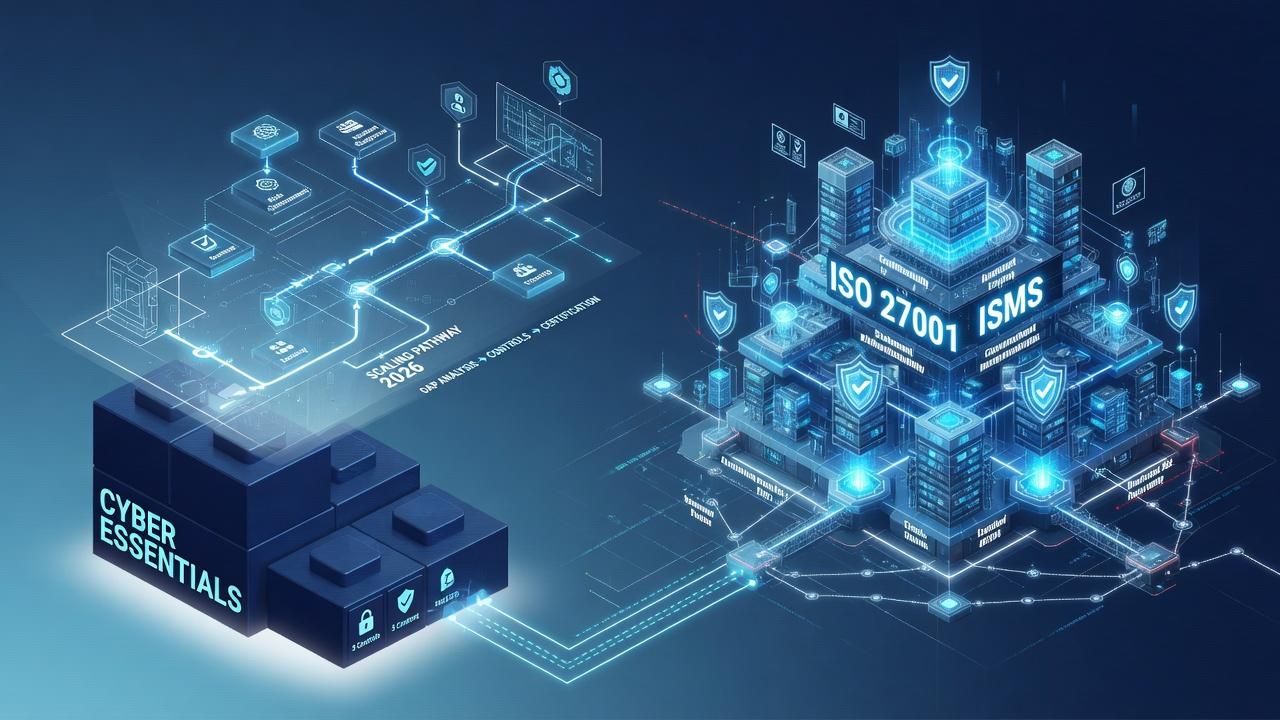
From Hygiene to Governance: How to Scale Cyber Essentials into a Full ISO 27001 ISMS in 2026
Discover how to scale Cyber Essentials into a full ISO 27001 ISMS in 2026. Reuse evidence, map controls, meet DORA & NIS2 rules and win enterprise contracts.
Run Maturity Assessments with GRADUM
Transform your compliance journey with our AI-powered assessment platform
Assess your organization's maturity across multiple standards and regulations including ISO 27001, DORA, NIS2, NIST, GDPR, and hundreds more. Get actionable insights and track your progress with collaborative, AI-powered evaluations.
Explore More Comparisons
See how EU AI Act and ISO 21001 compare against other standards