
FISMA vs MAS TRM
FISMA
U.S. federal law mandating risk-based cybersecurity programs
MAS TRM
Singapore guidelines for financial technology risk management
Quick Verdict
FISMA mandates risk-based cybersecurity for US federal systems via NIST RMF, ensuring compliance for agencies and contractors. MAS TRM provides supervisory guidelines for Singapore FIs, emphasizing proportional governance and cyber resilience. Organizations adopt them for regulatory adherence and operational security.
FISMA
Federal Information Security Modernization Act of 2014
Key Features
- Mandates NIST RMF 7-step risk management lifecycle
- Requires continuous monitoring and ongoing authorization
- Enforces FIPS 199 system impact categorization
- Demands NIST SP 800-53 tailored security controls
- Imposes annual IG independent program assessments
MAS TRM
MAS Technology Risk Management Guidelines
Key Features
- Board and senior management accountability
- Proportional controls by risk criticality
- Third-party risk as control extension
- Defence-in-depth cyber resilience
- Annual pen testing for internet systems
Detailed Analysis
A comprehensive look at the specific requirements, scope, and impact of each standard.
FISMA Details
What It Is
Federal Information Security Modernization Act (FISMA) of 2014 is a U.S. federal law establishing a risk-based framework for protecting federal information and systems. It mandates agency-wide information security programs using NIST Risk Management Framework (RMF) for confidentiality, integrity, and availability.
Key Components
- NIST RMF 7 steps: Prepare, Categorize, Select, Implement, Assess, Authorize, Monitor.
- NIST SP 800-53 controls tailored by FIPS 199 impact levels (Low/Moderate/High).
- Continuous monitoring, POA&Ms, annual IG assessments.
- Oversight by OMB, DHS/CISA.
Why Organizations Use It
Federal agencies and contractors must comply to avoid noncompliance penalties, contract loss, debarment. Provides risk reduction, market access, operational efficiency, trust-building.
Implementation Overview
Phased RMF approach: governance/inventory, categorize/select controls, implement/assess/authorize, monitor. Applies to agencies, contractors; requires SSPs, audits. Scales from small to enterprise via automation.
MAS TRM Details
What It Is
MAS Technology Risk Management (TRM) Guidelines (revised January 2021) are supervisory guidance issued by the Monetary Authority of Singapore for financial institutions. They provide a principles-based framework for managing technology and cyber risks, emphasizing governance, controls, and resilience to protect confidentiality, integrity, and availability (CIA) of systems and data.
Key Components
- 15 main sections covering governance, risk frameworks, secure development, IT service management, resilience, access controls, cryptography, cyber operations, assessments, and audit.
- Synthesised into 12 core principles like board accountability, asset classification, third-party oversight, and defence-in-depth.
- Proportional implementation based on risk profile; no fixed controls but minimums like annual staff training and pen testing.
Why Organizations Use It
- Ensures MAS supervisory compliance and avoids enforcement actions like fines.
- Enhances cyber resilience, operational stability, and customer trust.
- Supports digital transformation while managing third-party and ecosystem risks.
Implementation Overview
- Phased approach: governance setup, asset inventory, risk assessment, control deployment, testing.
- Applies to all MAS-supervised FIs; scalable by size/complexity.
- No formal certification; demonstrated via audits, metrics, and board reporting. (178 words)
Key Differences
| Aspect | FISMA | MAS TRM |
|---|---|---|
| Scope | Federal info systems, RMF lifecycle, continuous monitoring | Financial sector tech risks, governance to cyber ops |
| Industry | US federal agencies, contractors, nationwide | Singapore financial institutions, regional focus |
| Nature | Mandatory US law, NIST RMF enforcement via oversight | Supervisory guidelines, proportional implementation |
| Testing | RMF assessments, continuous monitoring, IG audits | Annual PT for internet systems, VA, cyber exercises |
| Penalties | Contract loss, debarment, IG directives, funding cuts | Fines, license conditions, enforcement actions |
Scope
Industry
Nature
Testing
Penalties
Frequently Asked Questions
Common questions about FISMA and MAS TRM
FISMA FAQ
MAS TRM FAQ
You Might also be Interested in These Articles...
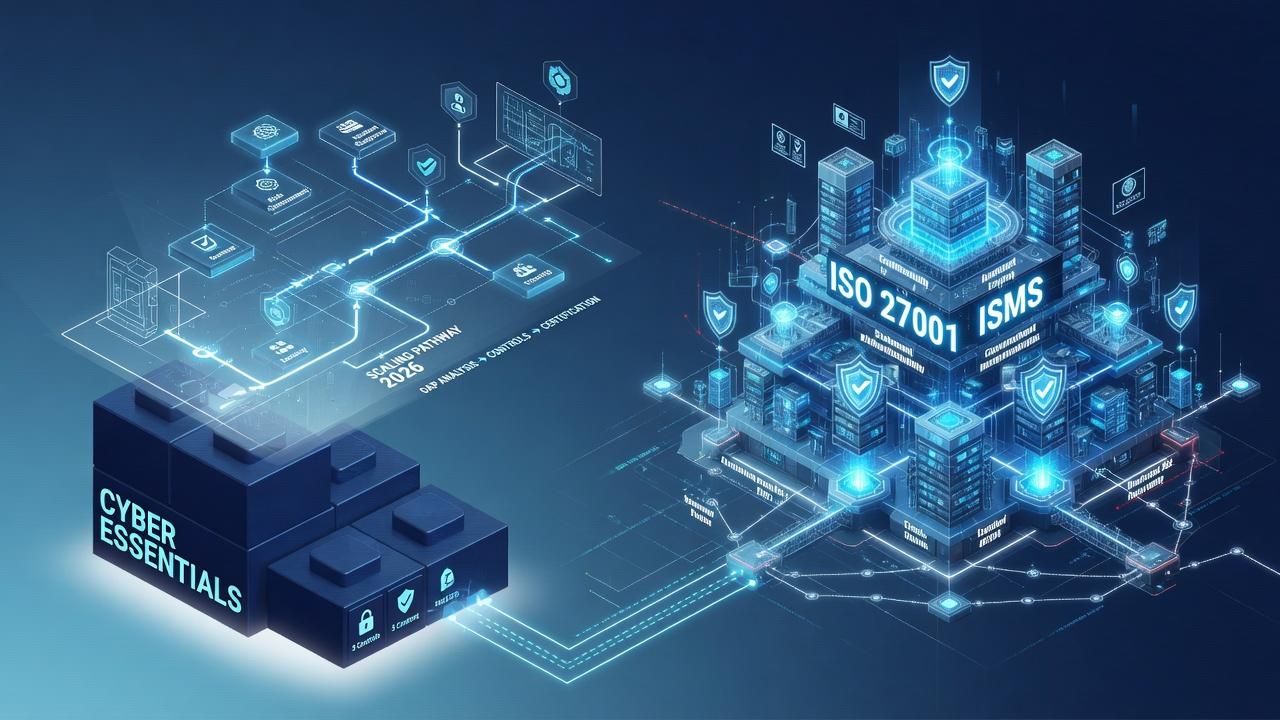
From Hygiene to Governance: How to Scale Cyber Essentials into a Full ISO 27001 ISMS in 2026
Discover how to scale Cyber Essentials into a full ISO 27001 ISMS in 2026. Reuse evidence, map controls, meet DORA & NIS2 rules and win enterprise contracts.

Beyond the Checkbox: Why Maturity Assessments are the Secret to Sustainable Compliance
Discover why maturity assessments beat binary compliance checks by uncovering hidden gaps and enabling continuous improvement for sustainable success. Read now!

NIST CSF 2.0 Govern Function Deep Dive: Building Executive Cybersecurity Governance from Scratch
Step-by-step blueprint for NIST CSF 2.0 Govern function: templates, RACI matrices, metrics to elevate cybersecurity governance to boardroom level. Reduce breach
Run Maturity Assessments with GRADUM
Transform your compliance journey with our AI-powered assessment platform
Assess your organization's maturity across multiple standards and regulations including ISO 27001, DORA, NIS2, NIST, GDPR, and hundreds more. Get actionable insights and track your progress with collaborative, AI-powered evaluations.
Explore More Comparisons
See how FISMA and MAS TRM compare against other standards