
FISMA vs SAMA CSF
FISMA
U.S. federal law mandating risk-based cybersecurity programs
SAMA CSF
Saudi regulatory framework for financial cybersecurity resilience
Quick Verdict
FISMA mandates NIST RMF for US federal agencies and contractors via law, while SAMA CSF requires maturity-based controls for Saudi financial firms through regulation. Agencies ensure compliance for contracts; Saudi banks build resilience against sector threats.
FISMA
Federal Information Security Modernization Act (FISMA 2014)
Key Features
- Mandates NIST RMF 7-step risk management lifecycle
- Requires continuous monitoring and ongoing authorization
- Applies to federal agencies and contractors handling data
- Enforces FIPS 199 system impact categorization
- Demands annual IG evaluations with maturity scoring
SAMA CSF
SAMA Cyber Security Framework Version 1.0
Key Features
- Six-level maturity model with Level 3 minimum
- Four domains: governance, risk, operations, third-party
- Board oversight and independent CISO requirement
- Principle-based controls aligned to NIST/ISO
- Periodic self-assessments and regulatory audits
Detailed Analysis
A comprehensive look at the specific requirements, scope, and impact of each standard.
FISMA Details
What It Is
Federal Information Security Modernization Act (FISMA) of 2014 is a U.S. federal law establishing a risk-based framework for protecting federal information and systems. It mandates agency-wide information security programs emphasizing continuous monitoring, incident reporting, and NIST Risk Management Framework (RMF) implementation across civilian executive branch agencies and contractors.
Key Components
- NIST RMF 7 steps: Prepare, Categorize, Select, Implement, Assess, Authorize, Monitor.
- NIST SP 800-53 controls tailored by FIPS 199 impact levels (Low/Moderate/High).
- Annual reporting via standardized metrics; IG independent evaluations with maturity levels (1-5).
- Oversight by OMB, DHS/CISA, focusing on CIA triad protections.
Why Organizations Use It
Federal agencies and contractors face legal mandates; noncompliance risks funding loss, debarment. Provides risk reduction, resilience, market access (e.g., FedRAMP). Builds trust, aligns with mission outcomes, enables competitive federal contracting.
Implementation Overview
Phased RMF approach: governance/inventory, categorization/control selection, implementation/assessment, continuous monitoring. Applies to all federal entities/contractors; requires SSPs, POA&Ms, ATOs. Involves automation, supply chain oversight; scalable for agencies/vendors.
SAMA CSF Details
What It Is
The Saudi Arabian Monetary Authority Cyber Security Framework (SAMA CSF), Version 1.0 (May 2017), is a mandatory regulatory framework for SAMA-regulated financial institutions in Saudi Arabia. It ensures detection, resistance, response, and recovery from cyber threats via governance, controls, and maturity modeling. Adopting a principle-based, risk-oriented approach, it prescribes outcomes across domains with self-assessments.
Key Components
- Four domains: Leadership & Governance, Risk Management & Compliance, Operations & Technology, Third-Party Security
- Subdomains with principles, objectives, control considerations (100+ subcontrols)
- Six-level Maturity Model (0-5; minimum Level 3: structured/formalized)
- Aligned with NIST, ISO 27001, PCI-DSS; compliance via questionnaires and audits
Why Organizations Use It
- Regulatory mandate avoids penalties, scrutiny
- Builds resilience, efficiency, competitive differentiation
- Enhances risk intelligence, vendor leverage, stakeholder trust
- Supports strategic growth in digital finance
Implementation Overview
- Phased: initiation/gap analysis, risk assessment, design/deployment, operate/monitor, audit/improve
- Targets banks, insurers, etc., in Saudi Arabia
- No certification; self-assessments, independent audits, and SAMA reviews required (179 words)
Key Differences
| Aspect | FISMA | SAMA CSF |
|---|---|---|
| Scope | Federal info systems, NIST RMF 7 steps | Financial sector, 4 domains + maturity model |
| Industry | US federal agencies/contractors | Saudi financial institutions only |
| Nature | US federal law, mandatory for agencies | Regulatory framework, mandatory for regulated entities |
| Testing | Annual IG assessments, continuous monitoring | Periodic self-assessments, SAMA audits |
| Penalties | Contract loss, debarment, IG reports | Fines, supervisory actions, license risks |
Scope
Industry
Nature
Testing
Penalties
Frequently Asked Questions
Common questions about FISMA and SAMA CSF
FISMA FAQ
SAMA CSF FAQ
You Might also be Interested in These Articles...

HITRUST CSF MyCSF Platform Deep Dive: Automating Evidence Collection for Continuous R2 Renewal in Multi-Regulated Environments 2025
Unpack MyCSF's AI features for HITRUST CSF: automate evidence tagging, maturity scoring & monitoring for R2 renewals amid 2025 regs. CISOs in healthcare/fintech
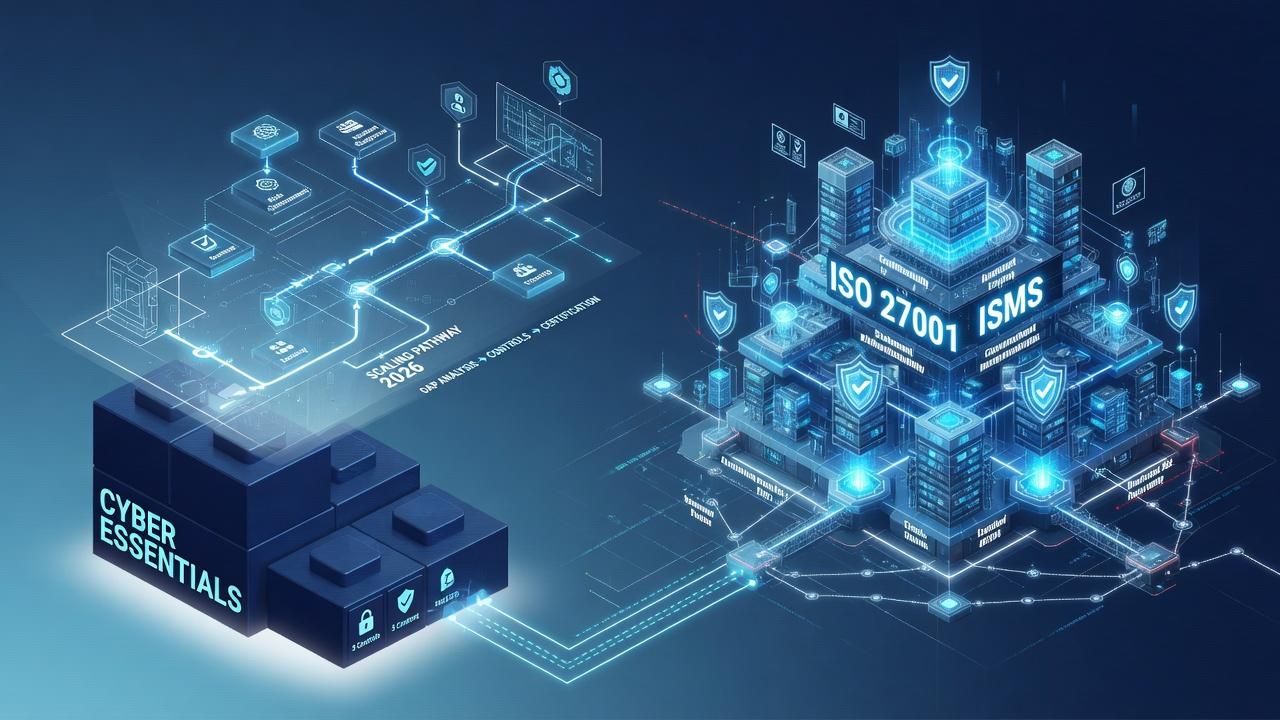
From Hygiene to Governance: How to Scale Cyber Essentials into a Full ISO 27001 ISMS in 2026
Discover how to scale Cyber Essentials into a full ISO 27001 ISMS in 2026. Reuse evidence, map controls, meet DORA & NIS2 rules and win enterprise contracts.

Top 10 SOC 2 Mistakes Startups Make (and Fixes with Automation)
Avoid top 10 SOC 2 mistakes like scope creep & evidence gaps. See fail/pass visuals, client quotes, Vanta/Drata automation fixes for bootstrapped startups. Quic
Run Maturity Assessments with GRADUM
Transform your compliance journey with our AI-powered assessment platform
Assess your organization's maturity across multiple standards and regulations including ISO 27001, DORA, NIS2, NIST, GDPR, and hundreds more. Get actionable insights and track your progress with collaborative, AI-powered evaluations.
Explore More Comparisons
See how FISMA and SAMA CSF compare against other standards