
IEC 62443 vs 23 NYCRR 500
IEC 62443
International standard for IACS cybersecurity frameworks
23 NYCRR 500
New York regulation for financial services cybersecurity.
Quick Verdict
IEC 62443 provides comprehensive IACS/OT security framework globally for industrial sectors, while 23 NYCRR 500 mandates financial services cybersecurity in NY with strict governance and fines. OT firms seek certs; NY firms ensure compliance.
IEC 62443
IEC 62443 series: IACS cybersecurity standards
Key Features
- Risk-based zones/conduits with SL-T targets
- Shared responsibility across asset owners/suppliers
- Security levels SL0-4 (SL-T/SL-C/SL-A triad)
- Seven foundational requirements (FR1-7)
- Modular ISASecure certifications (SDLA/CSA/SSA)
23 NYCRR 500
23 NYCRR Part 500 Cybersecurity Regulation
Key Features
- Annual CEO/CISO dual-signature compliance certification
- 72-hour cybersecurity incident notification to NYDFS
- MFA for remote access and privileged accounts
- Comprehensive TPSP risk management and contracts
- Annual penetration testing and vulnerability assessments
Detailed Analysis
A comprehensive look at the specific requirements, scope, and impact of each standard.
IEC 62443 Details
What It Is
IEC 62443 (ISA/IEC 62443 series) is a comprehensive international standard framework for securing Industrial Automation and Control Systems (IACS). It provides risk-based requirements spanning governance, system design, and component security, tailored for OT environments prioritizing safety and availability.
Key Components
- Four groupings: General (-1), Policies/Procedures (-2), System (-3), Components (-4).
- Seven foundational requirements (FR1-7: IAC, UC, SI, DC, RDF, TRE, RA).
- Security levels SL0-4 with SL-T (target), SL-C (capability), SL-A (achieved).
- Zone/conduit model; maturity levels ML1-4; ISASecure modular certifications (SDLA, CSA, SSA).
Why Organizations Use It
Adopted for OT-specific risk translation into procurement/design; reduces supply-chain vulnerabilities; enables certified components/systems. Builds stakeholder trust via shared responsibility; supports regulatory baselines (e.g., horizontal IEC recognition); lowers insurance costs through auditable assurance.
Implementation Overview
Phased: CSMS governance (-2-1), risk assessment/zoning (-3-2), controls (-3-3/-4-2). Applies to IACS operators across sectors; 18-36 months typical; voluntary consensus standard with ISASecure audits.
23 NYCRR 500 Details
What It Is
23 NYCRR Part 500 is the New York Department of Financial Services (NYDFS) cybersecurity regulation for financial services entities. It establishes minimum, risk-based cybersecurity requirements to protect nonpublic information (NPI) and information systems' confidentiality, integrity, and availability. The approach is hybrid: prescriptive controls with tailoring based on entity-specific risk assessments.
Key Components
- 14 core requirements including cybersecurity program, policy, CISO governance, MFA, encryption, access privileges, asset management, TPSP oversight, penetration testing, incident response, and 72-hour reporting.
- Built on risk assessment foundation (annual or upon material changes).
- Compliance model: Annual CEO/CISO certification by April 15, five-year record retention; enhanced for Class A companies (e.g., independent audits).
Why Organizations Use It
- Mandatory for NY-licensed financial entities (banks, insurers, etc.) to avoid multimillion-dollar fines.
- Enhances resilience, reduces incident risk, builds stakeholder trust.
- Strategic differentiation in vendor selection and insurance.
Implementation Overview
- Phased roadmap: gap analysis, CISO appointment, risk assessment, technical controls (MFA, PAM), TPSP contracts, testing.
- Applies to Covered Entities in NY financial sector; scalable by size/complexity.
- No universal certification; NYDFS exams and enforcement. (178 words)
Key Differences
| Aspect | IEC 62443 | 23 NYCRR 500 |
|---|---|---|
| Scope | IACS/OT cybersecurity lifecycle, zones/conduits, SLs | Financial services info systems, NPI protection, governance |
| Industry | Industrial sectors (energy, manufacturing) globally | NYDFS-regulated financial entities (banks, insurers) |
| Nature | Consensus standards series, voluntary with certification | Mandatory state regulation with fines/enforcement |
| Testing | ISASecure certs, SL-C/SL-A assessments, maturity levels | Annual pen tests, vuln scans, continuous monitoring option |
| Penalties | No legal penalties, loss of certification/reputation | Fines up to millions, consent orders, license actions |
Scope
Industry
Nature
Testing
Penalties
Frequently Asked Questions
Common questions about IEC 62443 and 23 NYCRR 500
IEC 62443 FAQ
23 NYCRR 500 FAQ
You Might also be Interested in These Articles...
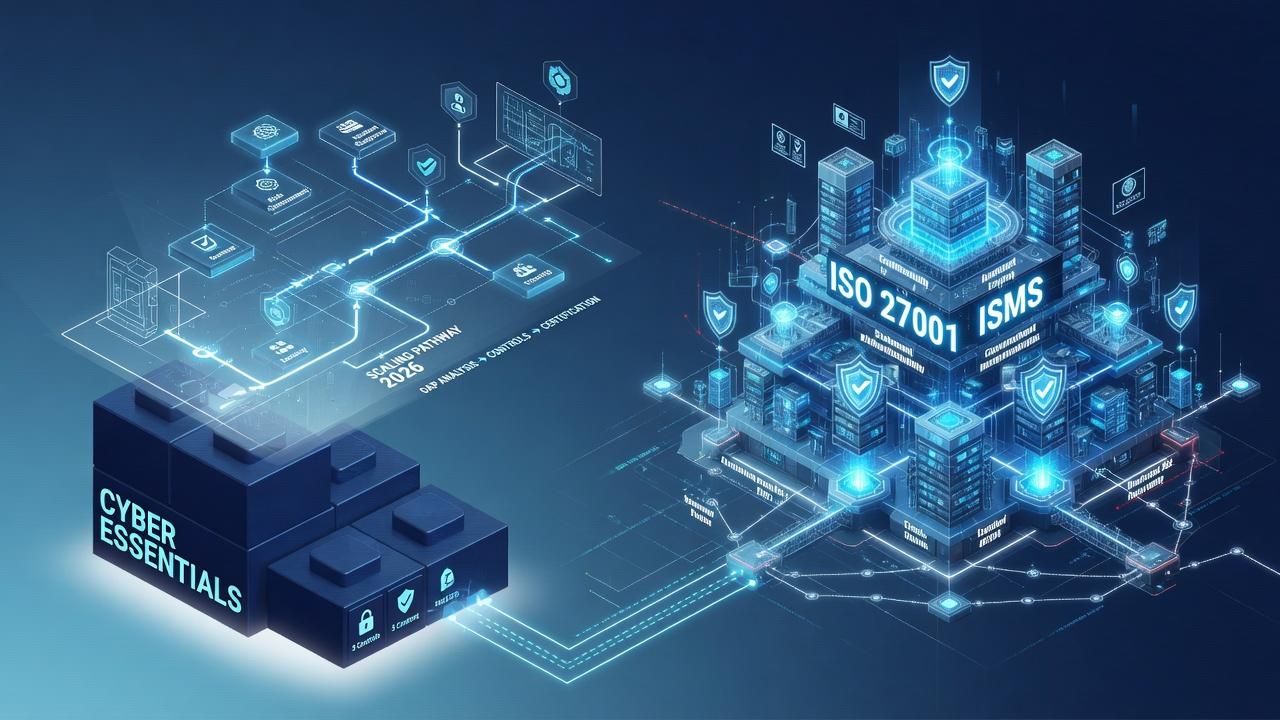
From Hygiene to Governance: How to Scale Cyber Essentials into a Full ISO 27001 ISMS in 2026
Discover how to scale Cyber Essentials into a full ISO 27001 ISMS in 2026. Reuse evidence, map controls, meet DORA & NIS2 rules and win enterprise contracts.

The 2026 Cyber Essentials Hybrid Audit Checklist: Gathering Unassailable Proof Across M365, AWS, and Azure
Build an evidence vault that passes Cyber Essentials Plus audits in 2026. Practical guidance on firewalls, secure configuration, and malware protection across M

Beyond the Burden: How Intuitive Compliance Software Transforms Daily Workflows
Explore intuitive compliance software that automates workflows, simplifies onboarding, and reduces stress. Cut non-compliance costs 3x and boost efficiency for
Run Maturity Assessments with GRADUM
Transform your compliance journey with our AI-powered assessment platform
Assess your organization's maturity across multiple standards and regulations including ISO 27001, DORA, NIS2, NIST, GDPR, and hundreds more. Get actionable insights and track your progress with collaborative, AI-powered evaluations.
Explore More Comparisons
See how IEC 62443 and 23 NYCRR 500 compare against other standards