
ISO 50001 vs ISO 22000
ISO 50001
International standard for energy management systems
ISO 22000
International standard for food safety management systems
Quick Verdict
ISO 50001 drives energy performance improvement across all sectors through EnMS and EnPIs, while ISO 22000 ensures food safety in the food chain via HACCP-based FSMS. Companies adopt them for cost savings, compliance, market access, and risk reduction.
ISO 50001
ISO 50001:2018 Energy management systems Requirements
Key Features
- Mandates demonstrable continual energy performance improvement via EnPIs
- Annex SL structure enables integration with ISO 9001/14001
- Energy review identifies SEUs, baselines, and improvement opportunities
- Requires normalized EnPIs, EnBs, and data collection plan
- Emphasizes top management leadership accountability and PDCA cycle
ISO 22000
ISO 22000:2018 Food safety management systems
Key Features
- Dual PDCA cycles for organizational and operational control
- Integrates HACCP principles with High Level Structure (HLS)
- Prerequisite programs (PRPs), OPRPs, and CCPs categorization
- Risk-based thinking across food chain organizations
- Traceability, communication, and supplier verification requirements
Detailed Analysis
A comprehensive look at the specific requirements, scope, and impact of each standard.
ISO 50001 Details
What It Is
ISO 50001:2018 is an international certification standard for Energy Management Systems (EnMS). It provides a systematic framework to improve energy performance—efficiency, use, and consumption—across organizations of any size or sector. Built on the Plan-Do-Check-Act (PDCA) cycle and Annex SL High-Level Structure, it ensures continual improvement through data-driven processes.
Key Components
- Core elements: energy policy, review, Significant Energy Uses (SEUs), EnPIs, EnBs, data collection plans, operational controls.
- Clauses 4-10 align with ISO 9001/14001 for integrated systems.
- Emphasizes risk/opportunity assessment, leadership accountability, audits, and demonstrable performance improvement.
- Optional third-party certification via ISO 50003.
Why Organizations Use It
- Reduces energy costs (4-20% savings), enhances resilience, supports GHG reductions.
- Meets regulatory expectations (e.g., EU directives), boosts ESG credibility.
- Manages supply risks, improves procurement, gains competitive edges in tenders.
Implementation Overview
- Phased: gap analysis, energy review, action plans, monitoring, audits.
- Applicable globally, scalable for SMEs to multinationals.
- Involves metering investment, training, cross-functional teams; certification optional but audit-based.
ISO 22000 Details
What It Is
ISO 22000:2018 is the international standard for Food Safety Management Systems (FSMS). It provides a certifiable framework integrating HACCP principles with management system rigor using the High Level Structure (HLS). Its primary purpose is to enable organizations across the food chain to control hazards, ensure safe products, and meet regulatory/customer requirements through risk-based thinking and dual PDCA cycles.
Key Components
- 10 clauses following HLS: context, leadership, planning, support, operation, evaluation, improvement.
- Core elements: PRPs, OPRPs, CCPs, hazard analysis, traceability, communication, validation/verification.
- Built on Codex HACCP and Annex SL for integration with ISO 9001/14001.
- Voluntary certification via accredited bodies with staged audits.
Why Organizations Use It
- Drives market access, supplier qualification, regulatory compliance.
- Reduces recalls, COPQ, enhances resilience.
- Builds stakeholder trust, competitive edge via GFSI alignment.
Implementation Overview
- Phased: gap analysis, PRPs/HACCP development, training, audits.
- Scalable for SMEs to multinationals in food chain sectors globally.
- Requires 3+ months operation pre-certification; annual surveillance.
Key Differences
| Aspect | ISO 50001 | ISO 22000 |
|---|---|---|
| Scope | Energy performance improvement via EnMS | Food safety hazards via FSMS |
| Industry | All sectors, energy consumers globally | Food chain organizations worldwide |
| Nature | Voluntary certification standard | Voluntary certification standard |
| Testing | EnPI monitoring, internal audits | HACCP validation, internal audits |
| Penalties | Loss of certification only | Loss of certification only |
Scope
Industry
Nature
Testing
Penalties
Frequently Asked Questions
Common questions about ISO 50001 and ISO 22000
ISO 50001 FAQ
ISO 22000 FAQ
You Might also be Interested in These Articles...
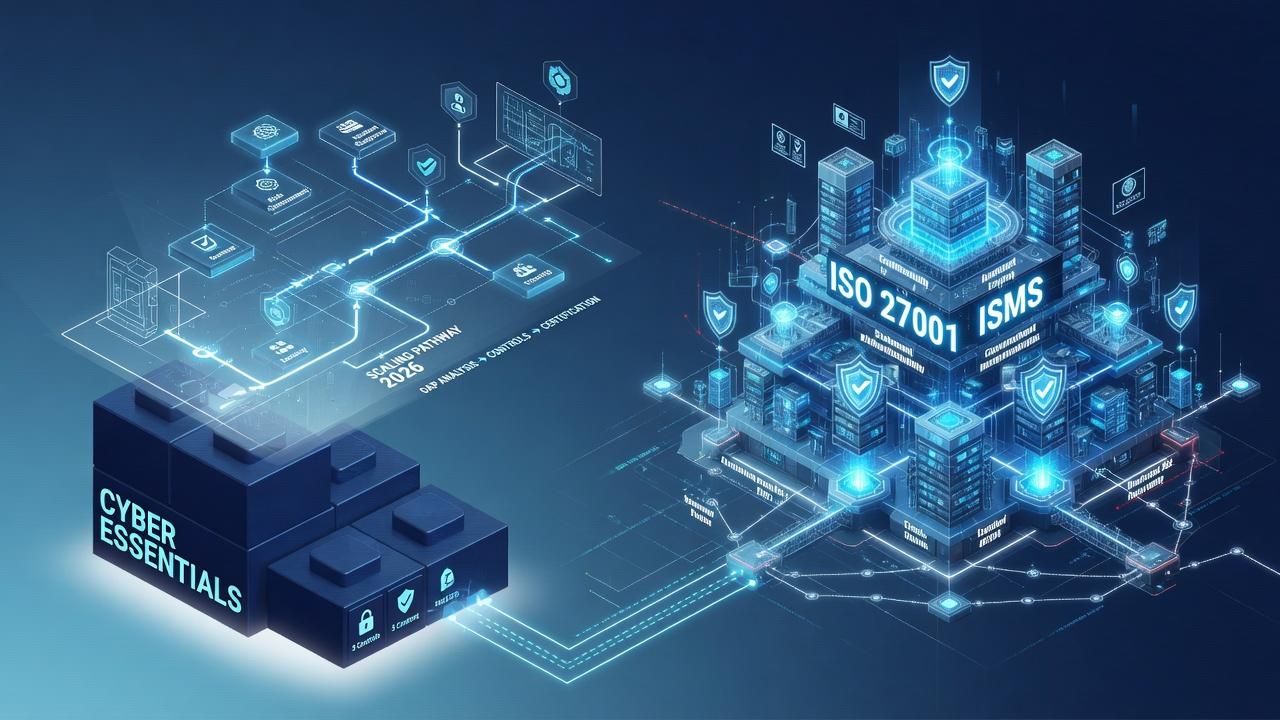
From Hygiene to Governance: How to Scale Cyber Essentials into a Full ISO 27001 ISMS in 2026
Discover how to scale Cyber Essentials into a full ISO 27001 ISMS in 2026. Reuse evidence, map controls, meet DORA & NIS2 rules and win enterprise contracts.

EU AI Act High-Risk Classification Guide: Operationalizing Transparency in Surfer SEO and Frase Content Pipelines for 2026
Operationalize EU AI Act Annex III high-risk rules for Surfer SEO & Frase in 2026. Steps for risk assessments, logging, human oversight in SEO pipelines. Comply

CMMC Level 3 Implementation Guide: Integrating NIST SP 800-172 Enhanced Controls for APT Defense
Step-by-step CMMC Level 3 guide for DIB contractors. Implement 24 NIST SP 800-172 controls on Level 2. Prep for DIBCAC, C3PAO scoping & 180-day POA&Ms. Boost cy
Run Maturity Assessments with GRADUM
Transform your compliance journey with our AI-powered assessment platform
Assess your organization's maturity across multiple standards and regulations including ISO 27001, DORA, NIS2, NIST, GDPR, and hundreds more. Get actionable insights and track your progress with collaborative, AI-powered evaluations.
Explore More Comparisons
See how ISO 50001 and ISO 22000 compare against other standards