
ISO 9001 vs ISA 95
ISO 9001
International standard for quality management systems
ISA 95
International standard for enterprise-manufacturing system integration.
Quick Verdict
ISO 9001 provides certifiable QMS for consistent quality across industries, while ISA 95 offers integration models for manufacturing systems. Companies adopt ISO 9001 for compliance and efficiency; ISA 95 for seamless ERP-MES data exchange and operational agility.
ISO 9001
ISO 9001:2015 Quality management systems – Requirements
Key Features
- Risk-based thinking integrated throughout QMS
- PDCA cycle drives continual improvement
- Seven quality management principles foundation
- Process approach with leadership commitment
- Annex SL enables multi-standard integration
ISA 95
ANSI/ISA-95 Enterprise-Control System Integration
Key Features
- Purdue levels 0-4 hierarchical model
- Activity models for manufacturing operations
- Object models for equipment and materials
- Standardized Level 3-4 transactions
- Alias services for identifier mapping
Detailed Analysis
A comprehensive look at the specific requirements, scope, and impact of each standard.
ISO 9001 Details
What It Is
ISO 9001:2015 is the international standard for quality management systems (QMS), providing requirements for organizations to ensure consistent products/services meet customer and regulatory needs. It uses a process-based, risk-thinking approach with PDCA cycle.
Key Components
- 10 clauses (4-10 auditable): context, leadership, planning, support, operation, evaluation, improvement.
- Built on 7 quality principles: customer focus, leadership, engagement, process approach, improvement, evidence-based decisions, relationships.
- Annex SL for integration; voluntary third-party certification.
Why Organizations Use It
- Enhances customer satisfaction, efficiency, risk management.
- Boosts market access, reputation via 1M+ certifications.
- Drives cost savings, compliance, continual improvement.
Implementation Overview
- Gap analysis, process mapping, training, audits.
- 6-12 months typical; suits all sizes/sectors globally.
- Certification via accredited bodies with surveillance.
ISA 95 Details
What It Is
ISA-95 (ANSI/ISA-95, IEC 62264) is an international framework standard for integrating enterprise business systems with manufacturing operations and control systems. Its primary purpose is to define models, terminology, and interfaces reducing integration risks between Level 3 (MES/MOM) and Level 4 (ERP) in the Purdue hierarchy, using activity, object, and information models.
Key Components
- Eight parts: models/terminology (Part 1), objects/attributes (Parts 2/4), activities (Part 3), transactions (Part 5), messaging/aliasing/profiles (Parts 6-8).
- Core Purdue levels 0-4, equipment hierarchy, shared semantics for materials, equipment, personnel, production.
- No formal certification; compliance via architectural alignment and training programs.
Why Organizations Use It
- Reduces integration costs, errors; enables semantic consistency, OEE, traceability.
- Supports IT/OT collaboration, cybersecurity segmentation, Industry 4.0.
- Builds trust via auditable data exchanges, regulatory compliance in manufacturing.
Implementation Overview
- Phased: assessment, canonical modeling, pilot, rollout with governance.
- Applies to manufacturing firms; high complexity needs cross-functional teams.
- Focus on data governance, no mandatory audits.
Key Differences
| Aspect | ISO 9001 | ISA 95 |
|---|---|---|
| Scope | Quality management systems for all operations | Enterprise-manufacturing system integration |
| Industry | All industries worldwide, any size | Manufacturing, process/discrete sectors |
| Nature | Voluntary certifiable QMS standard | Reference architecture/framework |
| Testing | Third-party audits, internal reviews | No formal certification, conformance testing |
| Penalties | Loss of certification, market exclusion | No penalties, integration risks/costs |
Scope
Industry
Nature
Testing
Penalties
Frequently Asked Questions
Common questions about ISO 9001 and ISA 95
ISO 9001 FAQ
ISA 95 FAQ
You Might also be Interested in These Articles...

Unpacking the True Cost: A Guide to Calculating TCO for Modern Compliance Monitoring Software
Unpack the true Total Cost of Ownership (TCO) for compliance monitoring software. Factor in licenses, implementation, training, maintenance, and ROI savings for

From Reactive Gatekeeper to Proactive Strategist: How Compliance Software Reshapes the Compliance Professional's Day
Discover how compliance software automates monitoring, delivers real-time insights, and transforms compliance pros from reactive gatekeepers to proactive strate
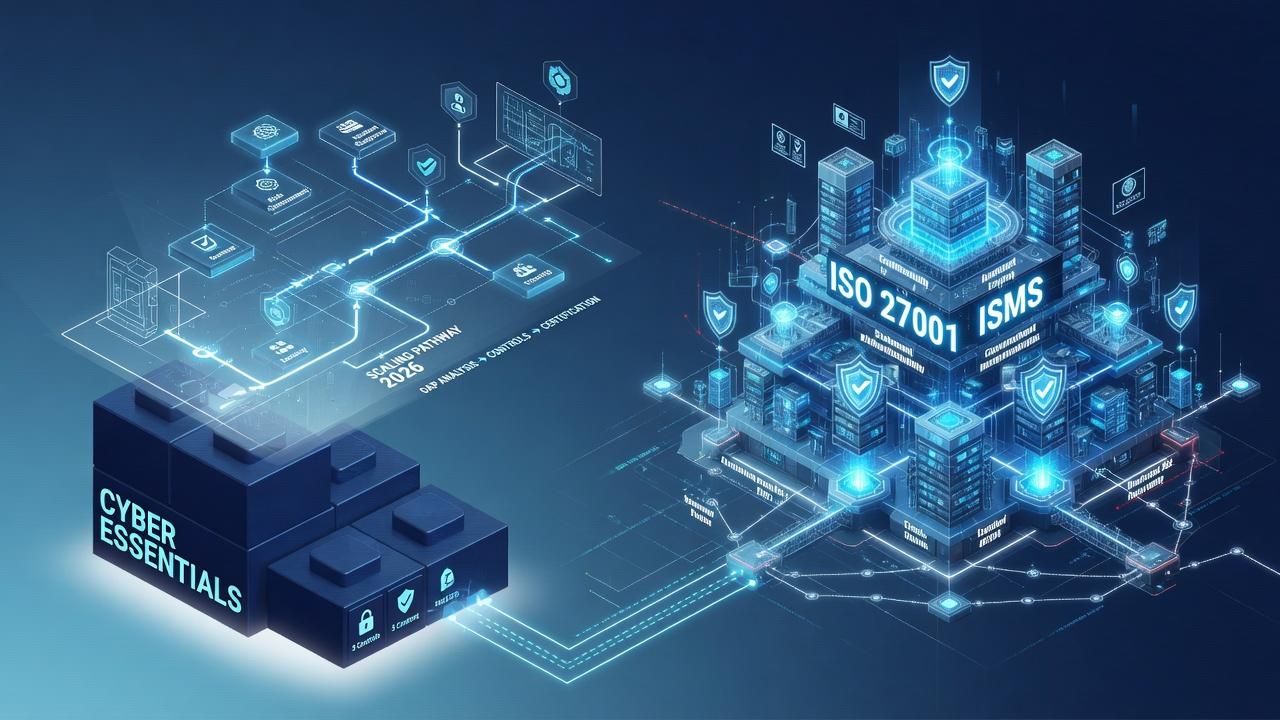
From Hygiene to Governance: How to Scale Cyber Essentials into a Full ISO 27001 ISMS in 2026
Discover how to scale Cyber Essentials into a full ISO 27001 ISMS in 2026. Reuse evidence, map controls, meet DORA & NIS2 rules and win enterprise contracts.
Run Maturity Assessments with GRADUM
Transform your compliance journey with our AI-powered assessment platform
Assess your organization's maturity across multiple standards and regulations including ISO 27001, DORA, NIS2, NIST, GDPR, and hundreds more. Get actionable insights and track your progress with collaborative, AI-powered evaluations.
Explore More Comparisons
See how ISO 9001 and ISA 95 compare against other standards