
DORA vs TOGAF
DORA
EU regulation for digital operational resilience in financial sector
TOGAF
Vendor-neutral standard for enterprise architecture methodology
Quick Verdict
DORA mandates ICT resilience for EU finance firms with testing and fines, while TOGAF provides voluntary EA methodology for global enterprises to align business and IT. Firms adopt DORA for regulatory compliance, TOGAF for strategic efficiency.
DORA
Digital Operational Resilience Act (Regulation (EU) 2022/2554)
Key Features
- Harmonized EU-wide ICT risk management frameworks
- 4-hour initial reporting for major ICT incidents
- Mandatory triennial threat-led penetration testing
- Oversight of critical third-party ICT providers
- Proportionality principle by entity size and risk
TOGAF
The Open Group Architecture Framework (TOGAF)
Key Features
- Iterative Architecture Development Method (ADM) lifecycle
- Content Framework and Metamodel for artifacts
- Enterprise Continuum for asset classification and reuse
- Reference models like TRM, SIB, and III-RM
- Architecture Capability Framework with governance board
Detailed Analysis
A comprehensive look at the specific requirements, scope, and impact of each standard.
DORA Details
What It Is
Digital Operational Resilience Act (DORA), formally Regulation (EU) 2022/2554, is an EU regulation enhancing digital operational resilience of the financial sector against ICT risks like cyberattacks and failures. It targets 20 financial entity types and critical third-party providers (CTPPs) across 27 member states. Employs a risk-based, proportional approach with comprehensive ICT strategies.
Key Components
- **ICT Risk Management FrameworksStrategies for risk identification, mitigation, and annual reviews.
- **Incident Reporting4-hour initial, 72-hour intermediate, 1-month root-cause reports.
- **Resilience TestingAnnual basic tests, triennial threat-led penetration testing (TLPT).
- **Third-Party OversightDue diligence, monitoring, and ESAs supervision of CTPPs. Compliance enforced via RTS/ITS, penalties up to 2% global turnover.
Why Organizations Use It
Mandated for ~22,000 entities to avoid fines, bolster resilience amid 74% ransomware exposure. Enhances continuity, stakeholder trust, and integrates with EBA/NIS2 rules. Drives cybersecurity innovation and systemic risk mitigation.
Implementation Overview
Conduct gap analyses, develop frameworks, implement testing/vendor management. Applies EU-wide proportionally by size/complexity; fully enforced since January 17, 2025. Authority audits and ongoing reviews required.
TOGAF Details
What It Is
TOGAF® Standard (The Open Group Architecture Framework) is a vendor-neutral enterprise architecture framework and methodology. It provides a proven, iterative approach for designing, planning, implementing, and governing enterprise-wide change across business and IT. At its core is the Architecture Development Method (ADM), a cyclical lifecycle.
Key Components
- **ADM phases10 phases from Preliminary to Change Management, spanning business, information systems, and technology domains.
- **Content FrameworkDeliverables, artifacts, building blocks, and metamodel for structured outputs.
- Enterprise Continuum and reference models (TRM, SIB, III-RM) for reuse.
- Architecture Capability Framework for governance. Practitioner certification available, no organizational certification.
Why Organizations Use It
- Aligns strategy with execution for efficiency, ROI, and reduced duplication.
- Enables risk management, agility, and vendor neutrality.
- Voluntary adoption drives competitive advantages like faster transformations and stakeholder trust.
Implementation Overview
Phased rollout with maturity assessment, tailoring, governance setup, pilots. Ideal for large enterprises across industries; requires training, tools, iterative ADM application.
Key Differences
| Aspect | DORA | TOGAF |
|---|---|---|
| Scope | Digital operational resilience in finance | Enterprise architecture across business/IT |
| Industry | EU financial sector only | All industries worldwide |
| Nature | Mandatory EU regulation | Voluntary methodology/framework |
| Testing | Annual basic, triennial TLPT | Iterative ADM maturity assessments |
| Penalties | Up to 2% global turnover fines | No legal penalties |
Scope
Industry
Nature
Testing
Penalties
Frequently Asked Questions
Common questions about DORA and TOGAF
DORA FAQ
TOGAF FAQ
You Might also be Interested in These Articles...

Measuring CIS Controls v8.1 in the Real World: KPIs, Dashboards, and Automated Evidence for Continuous Assurance
Master CIS Controls v8.1 measurement with essential KPIs, executive-ready dashboards, and automated evidence collection for continuous assurance. Make complianc

NIST CSF 2.0 Govern Function Deep Dive: Building Executive Cybersecurity Governance from Scratch
Step-by-step blueprint for NIST CSF 2.0 Govern function: templates, RACI matrices, metrics to elevate cybersecurity governance to boardroom level. Reduce breach
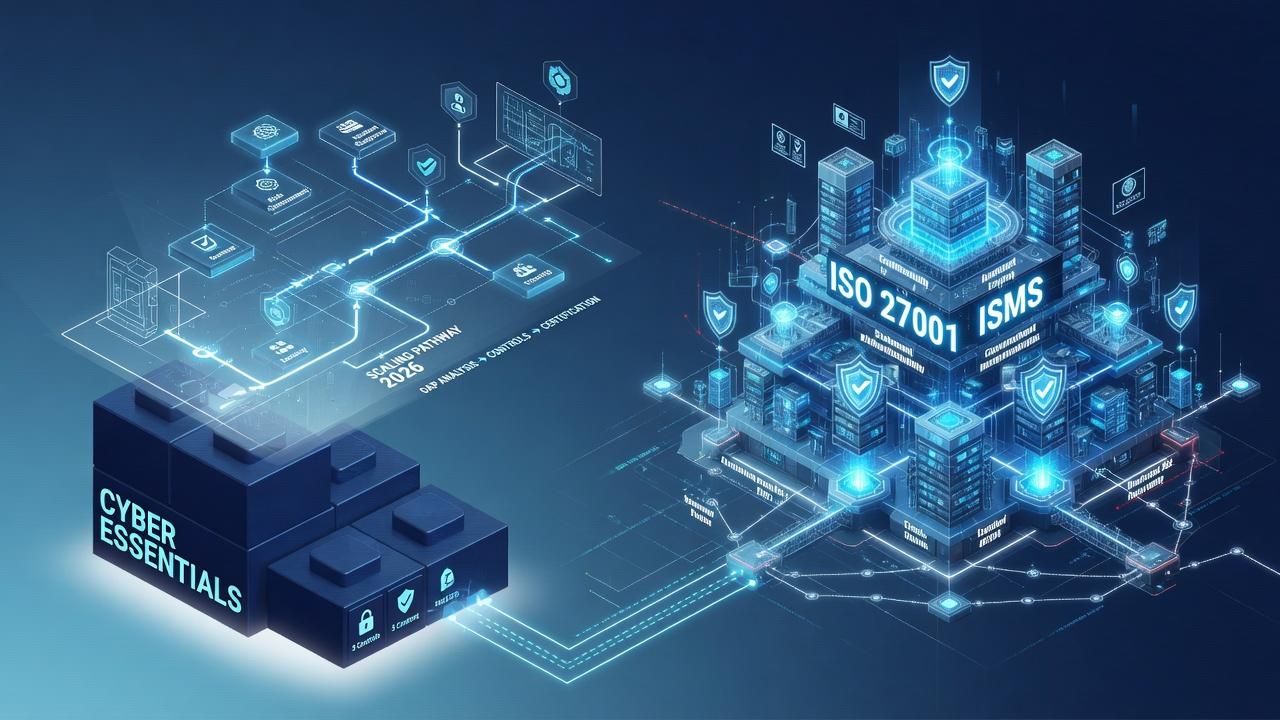
From Hygiene to Governance: How to Scale Cyber Essentials into a Full ISO 27001 ISMS in 2026
Discover how to scale Cyber Essentials into a full ISO 27001 ISMS in 2026. Reuse evidence, map controls, meet DORA & NIS2 rules and win enterprise contracts.
Run Maturity Assessments with GRADUM
Transform your compliance journey with our AI-powered assessment platform
Assess your organization's maturity across multiple standards and regulations including ISO 27001, DORA, NIS2, NIST, GDPR, and hundreds more. Get actionable insights and track your progress with collaborative, AI-powered evaluations.
Explore More Comparisons
See how DORA and TOGAF compare against other standards