
FedRAMP vs U.S. SEC Cybersecurity Rules
FedRAMP
U.S. program standardizing federal cloud security authorizations
U.S. SEC Cybersecurity Rules
U.S. SEC regulation for cybersecurity incident and risk disclosures
Quick Verdict
FedRAMP standardizes cloud security authorizations for federal use, while U.S. SEC rules mandate rapid incident disclosures and governance transparency for public companies. FedRAMP enables government contracts; SEC protects investors.
FedRAMP
Federal Risk and Authorization Management Program
Key Features
- Reusable authorizations across federal agencies
- NIST SP 800-53 baselines by impact levels
- Independent 3PAO security assessments required
- Continuous monitoring with monthly deliverables
- Public Marketplace listing authorized offerings
U.S. SEC Cybersecurity Rules
Cybersecurity Risk Management, Strategy, Governance, Incident Disclosure
Key Features
- Four-business-day material incident disclosure via Form 8-K
- Annual risk management, strategy, governance in Form 10-K
- Inline XBRL tagging for machine-readable disclosures
- Board oversight and management expertise requirements
- Inclusion of third-party risks in processes
Detailed Analysis
A comprehensive look at the specific requirements, scope, and impact of each standard.
FedRAMP Details
What It Is
FedRAMP (Federal Risk and Authorization Management Program) is a U.S. government-wide standardized framework for security assessment, authorization, and continuous monitoring of cloud services used by federal agencies. Its primary purpose is to enable secure, reusable cloud adoption via risk-based assessments aligned with NIST SP 800-53 controls and FIPS 199 impact levels (Low, Moderate, High).
Key Components
- Baselines with 156-410 controls tailored for cloud environments (Low, Moderate, High, LI-SaaS)
- Core artifacts: SSP, SAR, POA&M, assessed by accredited 3PAOs
- Built on NIST standards; emphasizes continuous monitoring
- Compliance via Agency or Program Authorizations listed in Marketplace
Why Organizations Use It
CSPs pursue FedRAMP for federal market access, as agencies must use authorized services. It reduces duplication, enhances security posture, builds trust, and differentiates competitively amid high demand (484 authorized offerings).
Implementation Overview
Involves gap analysis, documentation, 3PAO assessment, remediation; typical for CSPs of all sizes targeting U.S. federal cloud. Requires agency sponsor or Program path; ongoing ConMon with monthly reports.
U.S. SEC Cybersecurity Rules Details
U.S. SEC Cybersecurity Rules
SEC = U.S. Securities and Exchange Commission.
Description
2023 rules (Release 33-11216) mandate Form 8-K Item 1.05 disclosure of material cybersecurity incidents within 4 business days of materiality determination, and Reg S-K Item 106 annual reports on risk management, strategy, governance (Form 10-K Item 1C).
Why Organizations Use It
Required for public companies (Exchange Act registrants) to standardize disclosures, addressing inconsistent prior practices for investor protection.
Benefits
Timely/ uniform info boosts transparency, reduces asymmetry, enhances market efficiency, integrates cyber into enterprise risk/governance.
Key Aspects
- Materiality under securities law (no bright lines).
- Board oversight, management roles/expertise.
- Third-party risk processes.
- Inline XBRL tagging.
(128 words)
Key Differences
| Aspect | FedRAMP | U.S. SEC Cybersecurity Rules |
|---|---|---|
| Scope | Cloud security assessment, authorization, monitoring | Public company incident disclosure, governance |
| Industry | Federal agencies, cloud service providers | All SEC registrants, public companies |
| Nature | Standardized authorization program, mandatory for federal | Mandatory disclosure regulation, securities law |
| Testing | 3PAO independent assessments, continuous monitoring | No formal testing; internal materiality assessments |
| Penalties | Loss of authorization, procurement exclusion | SEC enforcement, fines, civil penalties |
Scope
Industry
Nature
Testing
Penalties
Frequently Asked Questions
Common questions about FedRAMP and U.S. SEC Cybersecurity Rules
FedRAMP FAQ
U.S. SEC Cybersecurity Rules FAQ
You Might also be Interested in These Articles...

CIS Controls v8.1, Operationalized: Top 10 Reasons Compliance Monitoring Software Accelerates Real-World Implementation
Operationalize CIS Controls v8.1 with compliance monitoring software. Turn checklists into dashboards, tickets, and audit-proof workflows. Top 10 reasons it acc
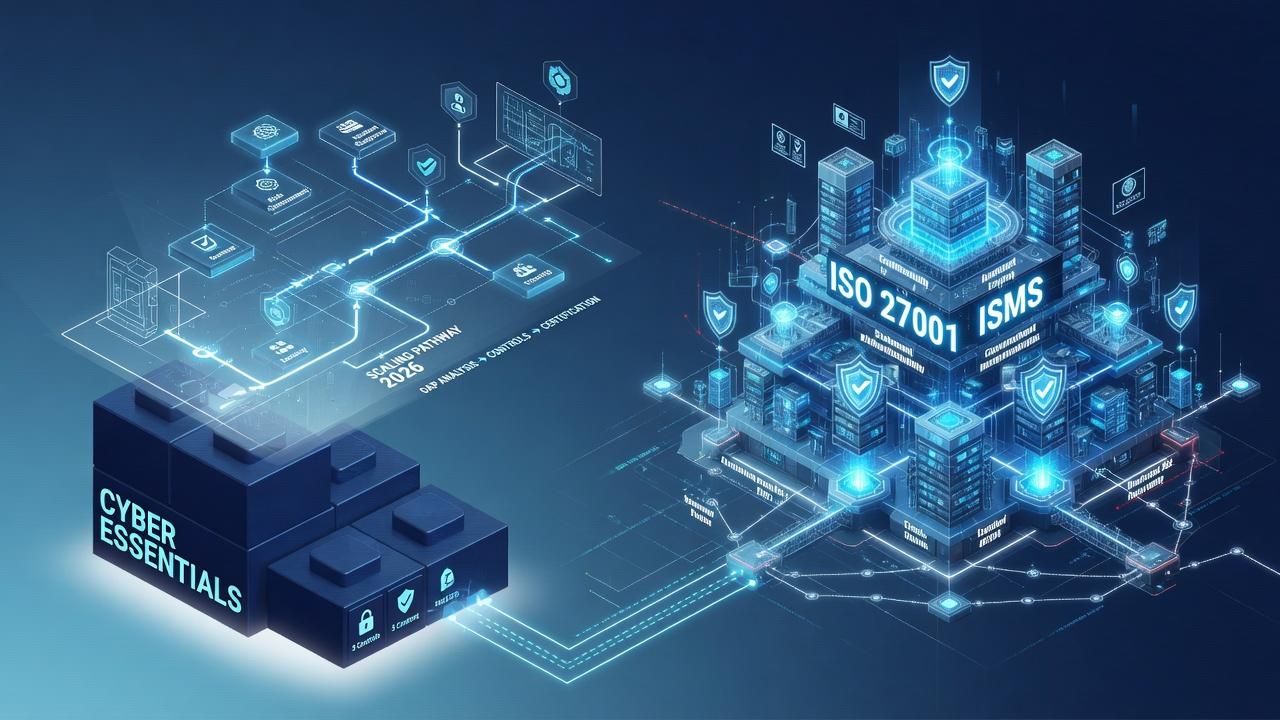
From Hygiene to Governance: How to Scale Cyber Essentials into a Full ISO 27001 ISMS in 2026
Discover how to scale Cyber Essentials into a full ISO 27001 ISMS in 2026. Reuse evidence, map controls, meet DORA & NIS2 rules and win enterprise contracts.

Unpacking the True Cost: A Guide to Calculating TCO for Modern Compliance Monitoring Software
Unpack the true Total Cost of Ownership (TCO) for compliance monitoring software. Factor in licenses, implementation, training, maintenance, and ROI savings for
Run Maturity Assessments with GRADUM
Transform your compliance journey with our AI-powered assessment platform
Assess your organization's maturity across multiple standards and regulations including ISO 27001, DORA, NIS2, NIST, GDPR, and hundreds more. Get actionable insights and track your progress with collaborative, AI-powered evaluations.
Explore More Comparisons
See how FedRAMP and U.S. SEC Cybersecurity Rules compare against other standards