
ISO 41001 vs CIS Controls
ISO 41001
International standard for facility management systems
CIS Controls
Prioritized cybersecurity framework for essential cyber hygiene
Quick Verdict
ISO 41001 establishes facility management systems for operational efficiency and sustainability, while CIS Controls provide prioritized cybersecurity safeguards. Organizations adopt ISO 41001 for FM certification and CIS Controls for threat mitigation and compliance alignment.
ISO 41001
ISO 41001:2018 Facility management management systems
Key Features
- Distinguishes FM organization from demand organization
- HLS alignment for integrated management systems
- Stakeholder requirement lifecycle and mapping
- Risk planning includes business continuity preparedness
- Service integration and operational coordination
CIS Controls
CIS Critical Security Controls v8
Key Features
- 18 prioritized controls with 153 actionable safeguards
- Implementation Groups IG1-IG3 for scalable maturity
- Technology-agnostic, measurable best practices
- Mappings to NIST CSF, ISO 27001, HIPAA
- Focus on governance, cloud, supply chain risks
Detailed Analysis
A comprehensive look at the specific requirements, scope, and impact of each standard.
ISO 41001 Details
What It Is
ISO 41001:2018 is the international management system standard for facility management (FM), specifying requirements with guidance for use. Its primary purpose is to enable effective, efficient FM delivery supporting the demand organization's objectives, meeting interested parties' needs, and ensuring sustainability. It follows the High-Level Structure (HLS) and PDCA cycle for risk-based planning and continual improvement.
Key Components
- Clauses 4-10 cover context, leadership, planning, support, operation, performance evaluation, and improvement.
- FM-specific elements include stakeholder mapping, service integration, and distinction between FM and demand organizations.
- Built on HLS for interoperability; certification via accredited third-party audits.
Why Organizations Use It
- Aligns FM strategically with business goals, reducing costs and risks.
- Enhances compliance, occupant wellbeing, and ESG performance, especially post-Amendment 1:2024 on climate action.
- Provides competitive edge in tenders; builds stakeholder trust through measurable outcomes.
Implementation Overview
- Phased approach: gap analysis, policy/objectives, processes, audits, certification.
- Applicable to all sizes/sectors; integrates with ISO 9001/14001/45001.
- Typical timeline 6-24 months; requires internal audits and management reviews.
CIS Controls Details
What It Is
CIS Critical Security Controls (CIS Controls) v8 is a community-driven cybersecurity framework providing prioritized, actionable best practices to reduce cyber risks. It focuses on 18 controls and 153 safeguards, using a task-based, technology-agnostic approach organized by Implementation Groups (IG1–IG3) for scalable adoption based on organizational maturity.
Key Components
- 18 Controls covering asset inventory, data protection, secure configuration, access management, vulnerability management, logging, malware defenses, incident response, and penetration testing.
- 153 Safeguards decomposed into measurable actions.
- IG1 (56 safeguards) for basic hygiene; IG2/IG3 for advanced needs.
- No formal certification; self-assessed compliance with mappings to NIST, ISO 27001.
Why Organizations Use It
- Mitigates 85% of common attacks, cuts breach costs, accelerates regulatory compliance.
- Builds resilience, operational efficiency, market trust; ideal for all sizes/industries.
Implementation Overview
- Phased roadmap: governance, gap analysis, IG1 deployment (3-9 months), expansion.
- Applies universally; tools like CIS Benchmarks aid execution.
Key Differences
| Aspect | ISO 41001 | CIS Controls |
|---|---|---|
| Scope | Facility management systems, PDCA, sustainability | Cybersecurity safeguards, asset protection, incident response |
| Industry | All sectors, non-sector specific, global | All industries, technology-agnostic, worldwide |
| Nature | Voluntary certifiable management standard | Voluntary prioritized cybersecurity best practices |
| Testing | Internal audits, management reviews, certification audits | Self-assessments, continuous monitoring, pen testing |
| Penalties | Loss of certification, no legal penalties | No penalties, voluntary framework |
Scope
Industry
Nature
Testing
Penalties
Frequently Asked Questions
Common questions about ISO 41001 and CIS Controls
ISO 41001 FAQ
CIS Controls FAQ
You Might also be Interested in These Articles...

ISO 27701 Standalone Certification in 2025: Debunking Myths and Navigating the New Reality
Debunk myths on ISO 27701 standalone certification post-2025. Clarify viability, accreditation bodies, ISO 27001 audit differences & procurement benefits. Guide
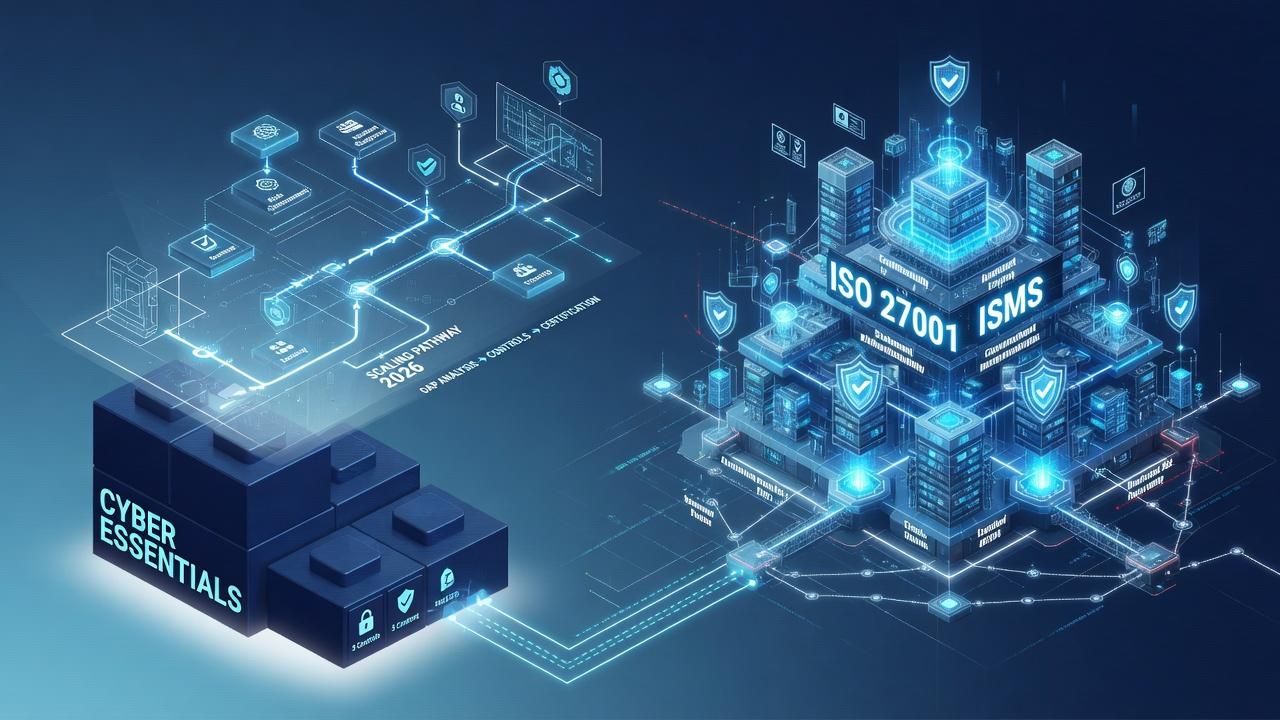
From Hygiene to Governance: How to Scale Cyber Essentials into a Full ISO 27001 ISMS in 2026
Discover how to scale Cyber Essentials into a full ISO 27001 ISMS in 2026. Reuse evidence, map controls, meet DORA & NIS2 rules and win enterprise contracts.

What is DORA and which Requirements does the Standard define?
Discover DORA requirements for info security, strict authority monitoring, and steps to achieve compliance. Build a resilient organization with our detailed gui
Run Maturity Assessments with GRADUM
Transform your compliance journey with our AI-powered assessment platform
Assess your organization's maturity across multiple standards and regulations including ISO 27001, DORA, NIS2, NIST, GDPR, and hundreds more. Get actionable insights and track your progress with collaborative, AI-powered evaluations.
Explore More Comparisons
See how ISO 41001 and CIS Controls compare against other standards