
MAS TRM vs CIS Controls
MAS TRM
Singapore guidelines for financial technology risk management
CIS Controls
Prioritized cybersecurity framework reducing common attack risks
Quick Verdict
MAS TRM provides supervisory guidance for Singapore FIs' technology risk governance and cyber resilience, while CIS Controls offer prioritized global cybersecurity safeguards. FIs adopt MAS TRM for regulatory compliance; all orgs use CIS for practical hygiene and risk reduction.
MAS TRM
Technology Risk Management Guidelines January 2021
CIS Controls
CIS Critical Security Controls v8.1
Key Features
- 18 prioritized controls with 156 actionable safeguards
- Implementation Groups IG1-IG3 for maturity scaling
- Technology-agnostic, hybrid/cloud-focused best practices
- Detailed mappings to NIST, PCI DSS, HIPAA frameworks
- CIS Benchmarks and tools for automated assessment
Detailed Analysis
A comprehensive look at the specific requirements, scope, and impact of each standard.
MAS TRM Details
What It Is
MAS Technology Risk Management (TRM) Guidelines (January 2021) are supervisory guidance issued by the Monetary Authority of Singapore for financial institutions. They provide a principles-based framework for governing technology and cyber risks, emphasizing proportional implementation based on risk profile, service complexity, and technology used to ensure CIA triad (confidentiality, integrity, availability).
Key Components
- 13 main sections covering governance, risk frameworks, secure development, IT operations, resilience, access controls, cryptography, data security, cyber operations, assessments, and online services.
- Synthesized 12 core principles like board accountability, asset classification, third-party oversight, security-by-design.
- Defence-in-depth approach with continuous monitoring and independent assurance; no fixed control count but minimums like annual staff training and pen testing.
Why Organizations Use It
Financial institutions adopt MAS TRM for regulatory supervision, avoiding regulatory actions (e.g., additional capital requirements). It enhances resilience, customer trust, and enables secure digital transformation amid cyber threats.
Implementation Overview
Risk-based rollout starts with board-approved appetite, asset inventories, control mapping. Applies to all MAS-supervised FIs proportionally; involves governance setup, testing regimes, third-party diligence. No formal certification but MAS examines observance via inspections.
CIS Controls Details
What It Is
CIS Critical Security Controls (CIS Controls) v8.1 is a community-driven, prescriptive cybersecurity framework of prioritized best practices to reduce cyber risks. It focuses on actionable safeguards across hybrid and cloud environments, using a risk-based, implementation-group approach for scalability.
Key Components
- 18 Controls with 156 Safeguards, organized into Implementation Groups (IG1–IG3) for maturity levels.
- Core principles: asset inventory, vulnerability management, logging, incident response.
- No formal certification; self-assessed compliance via tools like CIS RAM.
Why Organizations Use It
- Mitigates 85% of common attacks, accelerates regulatory compliance (NIST, PCI DSS, HIPAA).
- Delivers ROI via reduced breach probability, operational efficiency, insurance discounts.
- Builds stakeholder trust, supports contractual requirements, competitive differentiation.
Implementation Overview
- Phased roadmap: governance, discovery, foundational controls, expansion, assurance.
- Key activities: asset inventories, automated scanning, training, metrics tracking.
- Applicable to all sizes/industries; IG1 for SMBs, IG3 for enterprises.
Key Differences
| Aspect | MAS TRM | CIS Controls |
|---|---|---|
| Scope | Technology risk governance, cyber resilience, third-party in financial sector | 18 prioritized cybersecurity safeguards across all assets and environments |
| Industry | Singapore financial institutions (FIs), proportional by risk/complexity | All industries worldwide, scaled by Implementation Groups IG1-IG3 |
| Nature | Supervisory guidance, non-binding but considered in MAS supervision | Voluntary best practices framework, community-driven consensus safeguards |
| Testing | Annual pen testing for internet-facing systems, DR tests, cyber exercises | Continuous vulnerability scans, pen testing per IG, asset inventories |
| Penalties | Supervisory actions, fines, license conditions via MAS enforcement | No direct penalties, reputational/insurance impacts from non-adoption |
Scope
Industry
Nature
Testing
Penalties
Frequently Asked Questions
Common questions about MAS TRM and CIS Controls
MAS TRM FAQ
CIS Controls FAQ
You Might also be Interested in These Articles...

Top 5 Audit Survival Secrets for Your First SOC 2 Type 2: What Auditors Really Check (and How to Pass)
Master your first SOC 2 Type 2 audit with proven strategies: 40-sample testing, vendor gaps, CPA walkthroughs. Get checklists, scripts & tips from SignWell to s

TISAX Tabletop Exercises for ADAS Suppliers: Simulating Prototype IP Leaks and Ransomware in Hybrid Supply Chains (2025 Edition with Hero Scenario Visual)
Master TISAX 'Very High' tabletop exercises for ADAS suppliers with 2024 breach simulations like CAD leaks and ransomware. Get scripts, AAR templates, hybrid ti
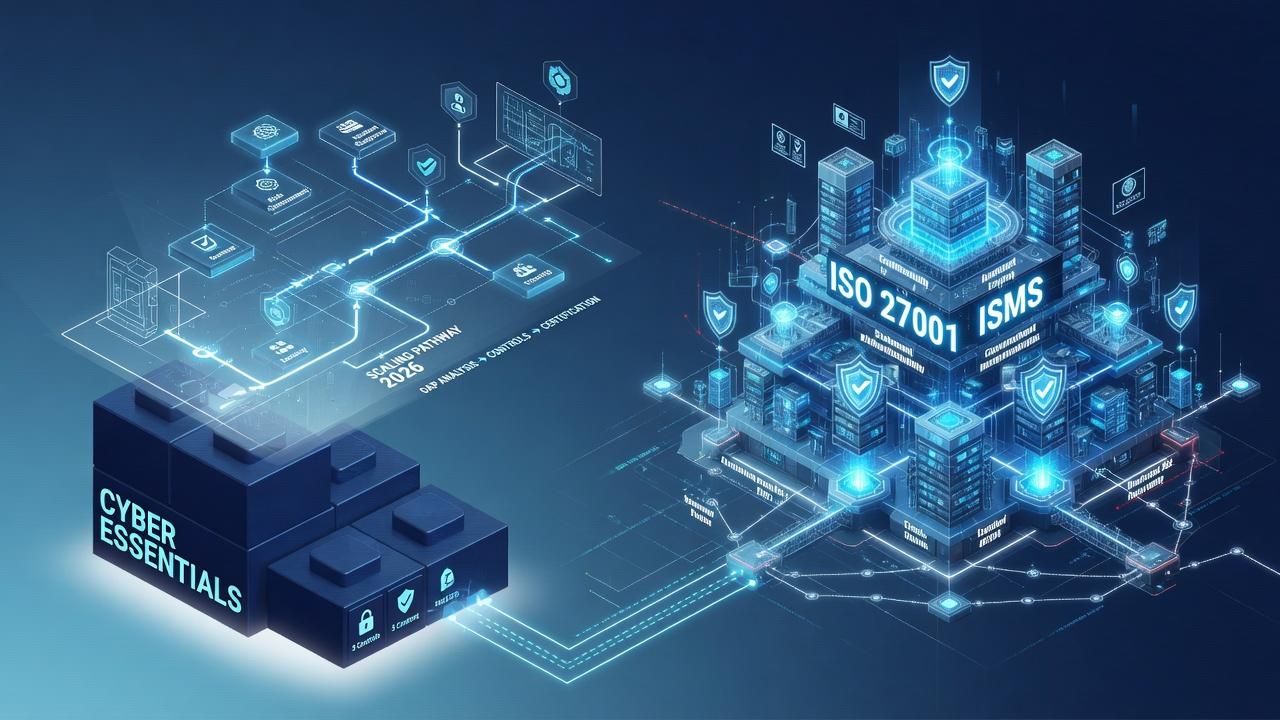
From Hygiene to Governance: How to Scale Cyber Essentials into a Full ISO 27001 ISMS in 2026
Discover how to scale Cyber Essentials into a full ISO 27001 ISMS in 2026. Reuse evidence, map controls, meet DORA & NIS2 rules and win enterprise contracts.
Run Maturity Assessments with GRADUM
Transform your compliance journey with our AI-powered assessment platform
Assess your organization's maturity across multiple standards and regulations including ISO 27001, DORA, NIS2, NIST, GDPR, and hundreds more. Get actionable insights and track your progress with collaborative, AI-powered evaluations.
Explore More Comparisons
See how MAS TRM and CIS Controls compare against other standards