
NIST CSF vs LEED
NIST CSF
Voluntary framework for managing cybersecurity risks organization-wide
LEED
Global framework for green building certification
Quick Verdict
NIST CSF provides voluntary cybersecurity risk management for all organizations, while LEED offers green building certification for construction projects. Companies adopt NIST CSF for strategic cyber resilience and LEED for sustainable, high-value assets and ESG leadership.
NIST CSF
NIST Cybersecurity Framework (CSF) 2.0
Key Features
- Introduces Govern function emphasizing strategic cybersecurity oversight
- Structures six core Functions for complete risk lifecycle
- Defines four Implementation Tiers for maturity assessment
- Uses Profiles for current-target gap analysis roadmaps
- Provides mappings to ISO 27001 and NIST 800-53
LEED
Leadership in Energy and Environmental Design
Key Features
- Point-based scoring across sustainability categories
- Third-party GBCI verification for credibility
- Tailored rating systems by project type
- Mandatory prerequisites plus elective credits
- Recertification for continuous performance improvement
Detailed Analysis
A comprehensive look at the specific requirements, scope, and impact of each standard.
NIST CSF Details
What It Is
NIST Cybersecurity Framework (CSF) 2.0 is a voluntary, risk-based guideline developed by NIST for managing cybersecurity risks. It provides flexible, adaptable structure applicable to organizations of any size or sector, emphasizing outcomes over prescriptive controls.
Key Components
- **Framework CoreSix Functions (Govern, Identify, Protect, Detect, Respond, Recover), 22 Categories, 106 Subcategories with informative references.
- **Implementation TiersFour levels (Partial to Adaptive) for evaluating risk management sophistication.
- **ProfilesCurrent and Target states for gap analysis. No formal certification; self-attestation via Profiles.
Why Organizations Use It
Enhances risk prioritization, common language for stakeholders, supply chain management, compliance demonstration. Builds trust, supports insurance discounts, aligns cyber with enterprise risk. Widely adopted globally for strategic benefits.
Implementation Overview
Create Profiles, assess Tiers, map to existing controls. Involves gap analysis, policy development, tooling integration. Suits all sizes/industries; quick for SMEs via templates, scalable for enterprises. No audits required.
LEED Details
What It Is
LEED (Leadership in Energy and Environmental Design) is a globally recognized green building certification framework by the U.S. Green Building Council (USGBC). It provides a performance-based system for sustainable design, construction, operations, and maintenance across all building types and phases. The approach combines mandatory prerequisites with elective credits for verifiable outcomes.
Key Components
- Seven core categories: Sustainable Sites, Water Efficiency, Energy & Atmosphere (highest weighted), Materials & Resources, Indoor Environmental Quality, Innovation, Regional Priority.
- Up to 110 points; prerequisites ensure baselines, credits drive excellence.
- Built on holistic principles emphasizing energy, health, and resilience.
- Tiers: Certified (40-49), Silver (50-59), Gold (60-79), Platinum (80+), verified by GBCI.
Why Organizations Use It
- Delivers cost savings, ESG alignment, and asset value uplift.
- Enhances tenant attraction, productivity, and regulatory incentives.
- Mitigates risks like energy volatility and climate impacts.
- Builds stakeholder trust via third-party credibility.
Implementation Overview
- Phased: gap analysis, scorecard, design, construction, verification, recertification.
- Suited for all sizes/industries globally; O+M for existing buildings.
- Requires documentation, modeling, commissioning, GBCI audits.
Key Differences
| Aspect | NIST CSF | LEED |
|---|---|---|
| Scope | Cybersecurity risk management across all functions | Sustainable building design, construction, operations |
| Industry | All sectors, sizes, global applicability | Construction, real estate, global buildings |
| Nature | Voluntary risk framework, no certification | Voluntary green building rating/certification |
| Testing | Self-assessment via Profiles and Tiers | Third-party GBCI review of documentation |
| Penalties | No legal penalties, self-attestation only | No penalties, loss of certification possible |
Scope
Industry
Nature
Testing
Penalties
Frequently Asked Questions
Common questions about NIST CSF and LEED
NIST CSF FAQ
LEED FAQ
You Might also be Interested in These Articles...

Scaling Compliance: How Modern Tools Transform Lean Teams into Regulatory Powerhouses
Discover how compliance monitoring tools empower lean teams to automate real-time checks, ensure GDPR/HIPAA/SOC 2 compliance, and scale oversight efficiently. T

CIS Controls v8.1 for Cloud & Kubernetes: A Practical Implementation Playbook (AWS/Azure/GCP + IaC)
Translate CIS Controls v8.1 to cloud-native: Kubernetes patterns for IAM, logging, vuln mgmt, hardening on AWS, Azure, GCP + IaC. Practical playbook for teams.
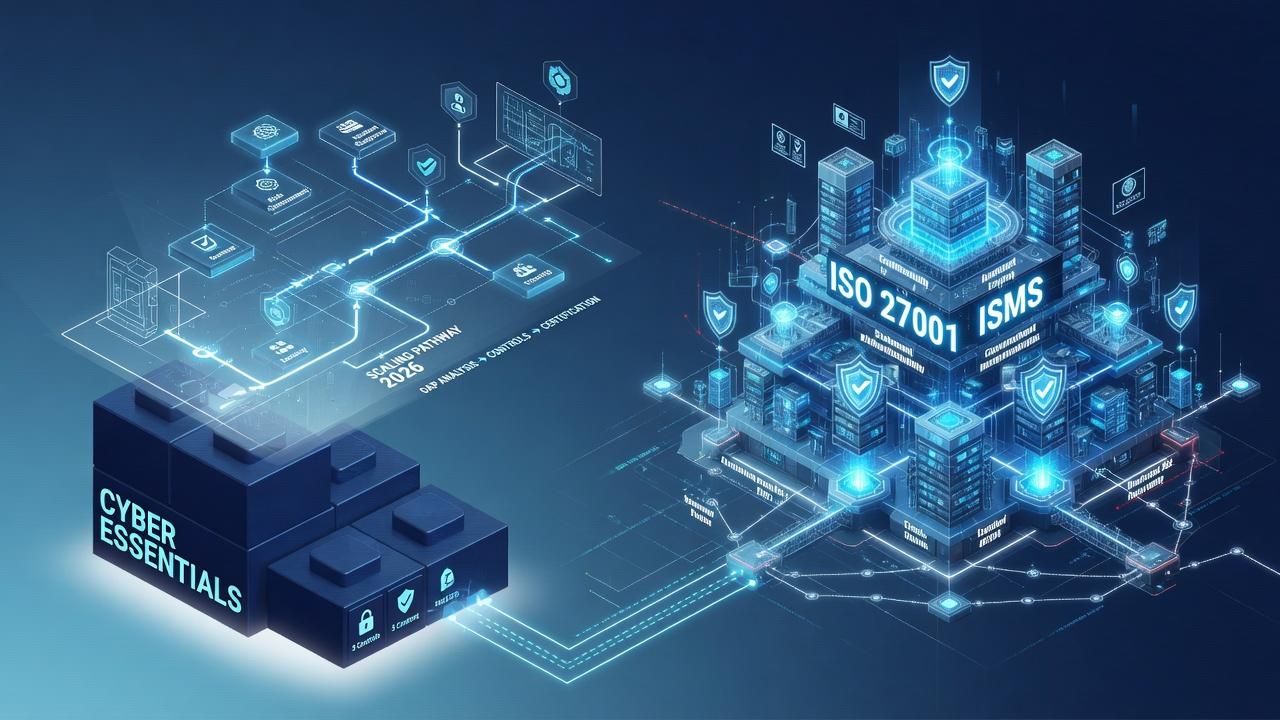
From Hygiene to Governance: How to Scale Cyber Essentials into a Full ISO 27001 ISMS in 2026
Discover how to scale Cyber Essentials into a full ISO 27001 ISMS in 2026. Reuse evidence, map controls, meet DORA & NIS2 rules and win enterprise contracts.
Run Maturity Assessments with GRADUM
Transform your compliance journey with our AI-powered assessment platform
Assess your organization's maturity across multiple standards and regulations including ISO 27001, DORA, NIS2, NIST, GDPR, and hundreds more. Get actionable insights and track your progress with collaborative, AI-powered evaluations.
Explore More Comparisons
See how NIST CSF and LEED compare against other standards