
PMBOK vs MAS TRM
PMBOK
Global standard for project management principles and practices
MAS TRM
Singapore guidelines for financial sector technology risk management
Quick Verdict
PMBOK provides voluntary project management principles globally, while MAS TRM enforces technology risk controls for Singapore FIs. Organizations adopt PMBOK for delivery excellence; MAS TRM for regulatory compliance and cyber resilience.
PMBOK
PMBOK® Guide – Seventh Edition
Key Features
- Tailors practices to project size, complexity, delivery model
- Twelve core principles focusing on value and leadership
- Eight performance domains for governance and outcomes
- Hybrid guidance for predictive, agile, hybrid approaches
- Standardized tools like EVM, WBS, risk registers
MAS TRM
MAS Technology Risk Management Guidelines
Key Features
- Board and senior management accountability
- Proportional risk-based implementation
- Third-party service risk management
- Comprehensive cyber defence layers
- Annual penetration testing for internet systems
Detailed Analysis
A comprehensive look at the specific requirements, scope, and impact of each standard.
PMBOK Details
What It Is
PMBOK® Guide – Seventh Edition, published by the Project Management Institute (PMI), is a comprehensive global standard and framework for project management. It codifies principles, performance domains, processes, and practices to deliver value through projects across industries. The approach emphasizes tailoring, value focus, and adaptability in predictive, agile, or hybrid contexts.
Key Components
- Twelve Core Principles: Stewardship, team, stakeholders, value, systems thinking, leadership, tailoring, quality, complexity, risk, adaptability, and change.
- Eight Performance Domains: Stakeholders, team, development approach and life cycle, planning, project work, delivery, measurement, and uncertainty.
- Legacy elements: 5 Process Groups (Initiating to Closing), 10 Knowledge Areas.
- Tools/techniques: WBS, EVM (CPI/SPI), risk registers, stakeholder matrices.
- Aligned with PMP® certification.
Why Organizations Use It
- Predictable delivery, reduced overruns, faster decisions via common language.
- Mitigates contractual, audit, reputational risks.
- Strategic edges: hybrid agility, AI/PMO integration, competitive differentiation.
- Builds stakeholder trust, talent retention through standards alignment.
Implementation Overview
Phased framework: executive alignment, gap analysis, tailoring/design, capability build, pilot, rollout, continuous improvement. Suits all organization sizes/industries; 12-24 months for enterprise. Focuses on PMO, training, tools; no org certification required.
MAS TRM Details
What It Is
MAS Technology Risk Management (TRM) Guidelines (January 2021) are supervisory guidance issued by Singapore's Monetary Authority of Singapore (MAS) for financial institutions. They provide a principles-based framework focused on governance, cybersecurity, resilience, and third-party risk to ensure confidentiality, integrity, and availability (CIA) of systems and data. The risk-proportional approach emphasizes outcomes over rigid rules.
Key Components
- 15 sections covering governance, risk frameworks, SDLC, IT service management, resilience, access controls, cryptography, cyber operations, assessments, and audit.
- Synthesised into 12 core principles like board accountability, asset classification, secure engineering, and layered defences.
- No fixed control count; built on defence-in-depth and continuous improvement.
- Compliance via supervisory review, no formal certification.
Why Organizations Use It
- Meets MAS supervisory expectations for licensed financial institutions.
- Enhances cyber resilience and operational stability amid digital threats.
- Builds stakeholder trust through robust governance and risk metrics.
- Enables proportional scaling for innovation while mitigating fines/enforcement.
Implementation Overview
- Phased: governance setup, asset inventory, control design, testing, monitoring.
- Targets MAS-supervised FIs; scalable by size/risk.
- Involves board approval, training, audits; 12-24 months typical.
Key Differences
| Aspect | PMBOK | MAS TRM |
|---|---|---|
| Scope | Project lifecycle, processes, performance domains | Technology/cyber risk governance, controls, resilience |
| Industry | All sectors globally, any organization size | Singapore financial institutions only |
| Nature | Voluntary global standard, no enforcement | Supervisory guidelines, enforcement via fines |
| Testing | Pilot projects, maturity assessments, audits | Annual pen tests, vulnerability scans, DR tests |
| Penalties | None, reputational or contractual risks only | Fines, license revocation, executive prohibitions |
Scope
Industry
Nature
Testing
Penalties
Frequently Asked Questions
Common questions about PMBOK and MAS TRM
PMBOK FAQ
MAS TRM FAQ
You Might also be Interested in These Articles...

Unpacking the True Cost: A Guide to Calculating TCO for Modern Compliance Monitoring Software
Unpack the true Total Cost of Ownership (TCO) for compliance monitoring software. Factor in licenses, implementation, training, maintenance, and ROI savings for
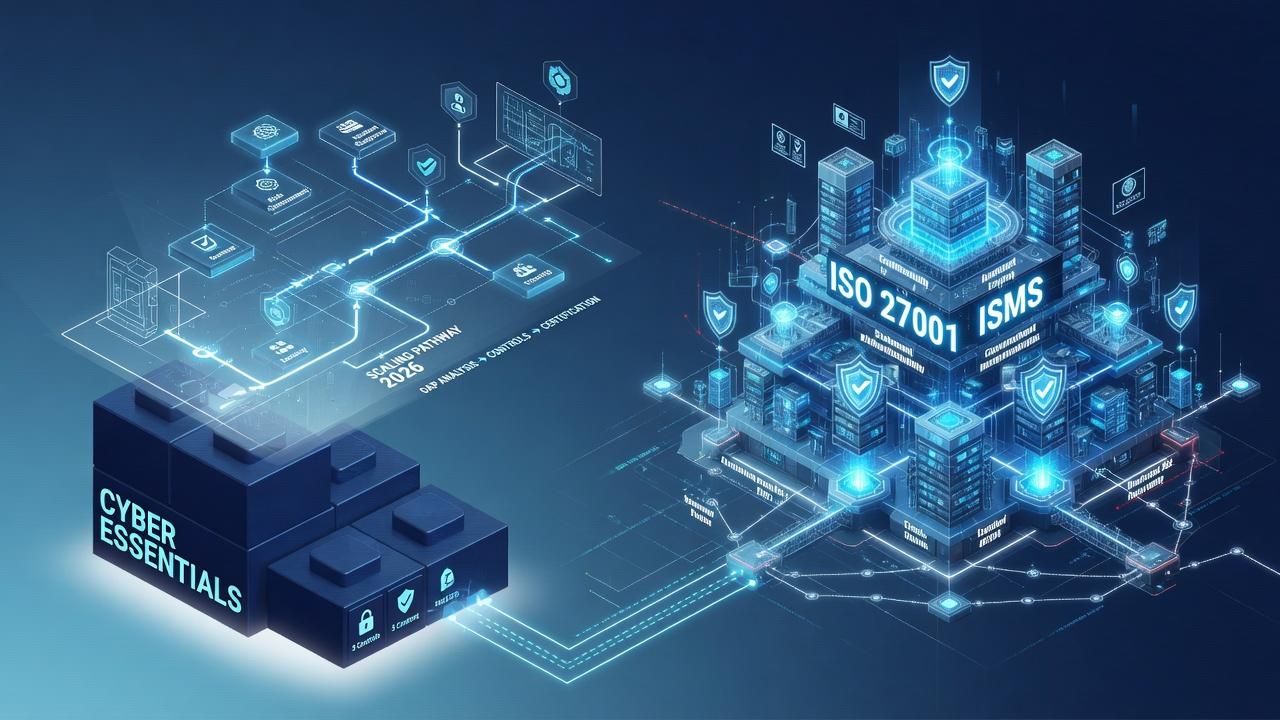
From Hygiene to Governance: How to Scale Cyber Essentials into a Full ISO 27001 ISMS in 2026
Discover how to scale Cyber Essentials into a full ISO 27001 ISMS in 2026. Reuse evidence, map controls, meet DORA & NIS2 rules and win enterprise contracts.

The SOC Maturity Roadmap: A 5-Step Blueprint for Scaling from Ad-Hoc to Optimized Operations
Unlock SOC excellence with our 5-step maturity roadmap. Compare SOC-CMM, NIST CSF, and CMMC frameworks to scale from ad-hoc to automated operations. Start your
Run Maturity Assessments with GRADUM
Transform your compliance journey with our AI-powered assessment platform
Assess your organization's maturity across multiple standards and regulations including ISO 27001, DORA, NIS2, NIST, GDPR, and hundreds more. Get actionable insights and track your progress with collaborative, AI-powered evaluations.
Explore More Comparisons
See how PMBOK and MAS TRM compare against other standards