
RoHS vs ISO 22301
RoHS
EU directive restricting hazardous substances in EEE
ISO 22301
International standard for business continuity management systems
Quick Verdict
RoHS restricts hazardous substances in EEE for EU market access, while ISO 22301 builds BCMS resilience against disruptions. Companies adopt RoHS for legal compliance and sales, ISO 22301 for risk mitigation, recovery speed, and stakeholder trust.
RoHS
Directive 2011/65/EU (RoHS 2)
Key Features
- Homogeneous material concentration limits (0.1%/0.01%)
- Restricts ten hazardous substances in EEE
- Open-scope applies to all EEE unless excluded
- Dynamic time-limited exemptions via delegated acts
- Requires technical file and EU Declaration of Conformity
ISO 22301
ISO 22301:2019 Business continuity management systems
Key Features
- PDCA cycle for continual BCMS improvement
- Business Impact Analysis for critical functions
- Risk assessment and recovery strategies
- Leadership commitment and policy requirements
- Operational testing and exercise mandates
Detailed Analysis
A comprehensive look at the specific requirements, scope, and impact of each standard.
RoHS Details
What It Is
Directive 2011/65/EU (RoHS 2) is an EU regulation restricting hazardous substances in electrical and electronic equipment (EEE). It aims to protect health and environment by limiting risks in waste management, using a homogeneous material approach with maximum concentration values (MCVs): 0.1% for most substances, 0.01% for cadmium.
Key Components
- Restricts 10 substances (Pb, Hg, Cd, Cr(VI), PBB, PBDE, DEHP, BBP, DBP, DIBP).
- Annex I categories for EEE scope; exclusions in Article 2(4).
- Annexes III/IV for time-limited exemptions.
- Compliance via technical documentation, EU Declaration of Conformity (DoC), and CE marking where applicable; supported by IEC 63000 and IEC 62321 testing.
Why Organizations Use It
Mandated for EU market access; reduces e-waste hazards, enhances recyclability with WEEE. Manages supply chain risks, ensures level playing field, builds stakeholder trust through verifiable compliance.
Implementation Overview
Risk-based: scope analysis, BoM review, supplier declarations, tiered testing (XRF screening, ICP-MS/GC-MS confirmation), exemption tracking. Applies to manufacturers/importers of EEE; 6-18 months typical, with 10-year documentation retention for audits.
ISO 22301 Details
What It Is
ISO 22301:2019 is an international certification standard for establishing, implementing, and improving a Business Continuity Management System (BCMS). It enables organizations to protect against disruptions, ensure recovery, and maintain critical operations. The standard follows a PDCA (Plan-Do-Check-Act) cycle and Annex SL high-level structure for flexibility and integration.
Key Components
- 10 clauses, with 4-10 forming the core: context, leadership, planning (BIA, risk assessment), support, operation, evaluation, improvement.
- Risk-based, non-prescriptive requirements tailored to organizational needs.
- Built on principles of resilience, continual improvement; 3-year certification with surveillance audits.
Why Organizations Use It
- Builds resilience against cyberattacks, disasters, supply failures; reduces downtime, losses.
- Supports compliance (e.g., NIS Directive, NIST); lowers insurance premiums.
- Enhances reputation, stakeholder trust, competitive procurement advantages.
- Integrates with ISO 27001, ISO 31000 for holistic risk management.
Implementation Overview
- Phased: gap analysis, BIA, policy development, training, testing, audits.
- Suits all sizes/sectors globally; typically 60 days to 6 months.
- Two-stage certification (readiness, effectiveness); tools accelerate process.
Key Differences
| Aspect | RoHS | ISO 22301 |
|---|---|---|
| Scope | Hazardous substances in EEE materials | Business continuity management systems |
| Industry | EEE manufacturers, global with regional variants | All sectors worldwide, all organization sizes |
| Nature | Mandatory EU directive for market access | Voluntary certification standard |
| Testing | XRF screening, IEC 62321 lab analysis | Tabletop exercises, internal audits, simulations |
| Penalties | Fines, recalls, market bans by Member States | Loss of certification, no legal penalties |
Scope
Industry
Nature
Testing
Penalties
Frequently Asked Questions
Common questions about RoHS and ISO 22301
RoHS FAQ
ISO 22301 FAQ
You Might also be Interested in These Articles...
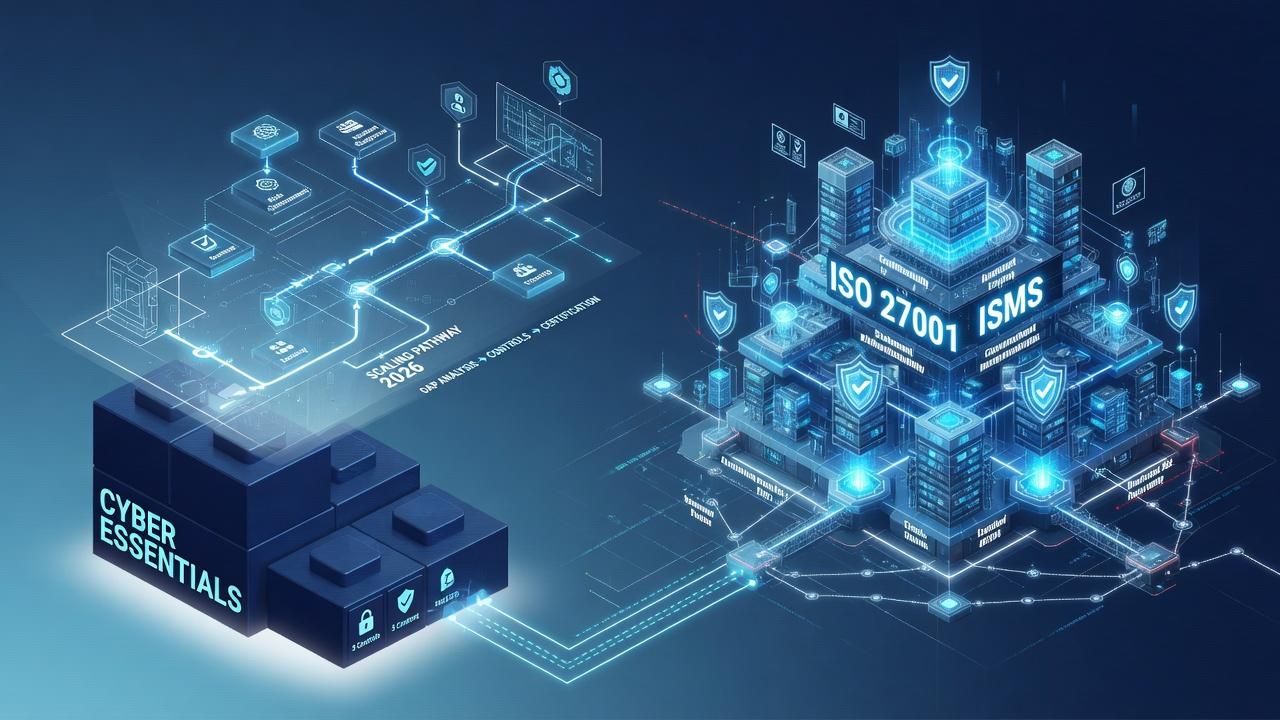
From Hygiene to Governance: How to Scale Cyber Essentials into a Full ISO 27001 ISMS in 2026
Discover how to scale Cyber Essentials into a full ISO 27001 ISMS in 2026. Reuse evidence, map controls, meet DORA & NIS2 rules and win enterprise contracts.

CIS Controls v8.1, Operationalized: Top 10 Reasons Compliance Monitoring Software Accelerates Real-World Implementation
Operationalize CIS Controls v8.1 with compliance monitoring software. Turn checklists into dashboards, tickets, and audit-proof workflows. Top 10 reasons it acc

Top 10 NIST CSF 2.0 Myths Busted: Separating Hype from Reality for Smarter Adoption
Bust 10 NIST CSF 2.0 myths like 'only for critical infrastructure' or 'Govern replaces Identify'. Plain-English breakdowns, evidence, and fixes for flexible ris
Run Maturity Assessments with GRADUM
Transform your compliance journey with our AI-powered assessment platform
Assess your organization's maturity across multiple standards and regulations including ISO 27001, DORA, NIS2, NIST, GDPR, and hundreds more. Get actionable insights and track your progress with collaborative, AI-powered evaluations.
Explore More Comparisons
See how RoHS and ISO 22301 compare against other standards