
CE Marking vs PRINCE2
CE Marking
EU marking for product conformity to harmonised legislation
PRINCE2
Structured methodology for project governance and controlled delivery
Quick Verdict
CE Marking mandates product safety compliance for EEA market access, while PRINCE2 provides governance for controlled project delivery. Manufacturers require CE for legal sales; organizations adopt PRINCE2 for repeatable success and risk management.
CE Marking
CE Marking (Conformité Européenne)
PRINCE2
PRINCE2: Projects IN Controlled Environments
Key Features
- Seven principles as guiding obligations
- Manage by stages with decision gates
- Manage by exception using tolerances
- Seven practices for continuous management
- Tailoring to suit project context
Detailed Analysis
A comprehensive look at the specific requirements, scope, and impact of each standard.
CE Marking Details
What It Is
CE Marking (Conformité Européenne) is the EU's mandatory conformity marking framework for products under harmonised legislation. It signifies the manufacturer's declaration that products meet essential health, safety, environmental, and consumer protection requirements. Scope covers categories like electrical equipment, machinery, toys, and medical devices via directives/regulations (e.g., LVD 2014/35/EU). Key approach: risk-based, using New Legislative Framework (NLF) modules for assessment.
Key Components
- Legislation mapping and essential requirements identification.
- Conformity modules (A-H): self-assessment or Notified Body involvement.
- Harmonised standards (OJEU-published) for presumption of conformity.
- Technical file, EU Declaration of Conformity (DoC), CE affixation. Self-declaration primary; third-party for high-risk; 10-year documentation retention.
Why Organizations Use It
Mandated for EEA market access; avoids bans, fines, recalls. Strategic benefits: single-market scale, procurement preference, liability reduction, standards-driven innovation. Builds stakeholder trust via proven compliance.
Implementation Overview
Phased: scope/gap analysis, risk assessment, testing/documentation, DoC/marking, post-market surveillance. Applies to manufacturers/importers/distributors; all sizes, EEA-focused industries. No central certification; authority audits technical files.
PRINCE2 Details
What It Is
PRINCE2 (Projects IN Controlled Environments) is a structured project management framework and methodology. It provides governance, control, and delivery mechanisms for projects of any scale. The principle-based approach emphasizes value delivery through staged management, tolerances, and tailoring.
Key Components
- Four integrated elements: People, 7 Principles, 7 Practices, 7 Processes.
- Principles as guiding obligations (e.g., continued business justification, manage by exception).
- Practices for continuous disciplines (Business Case, Risk, Quality).
- Processes cover lifecycle from Starting Up to Closing.
- Certification via Foundation and Practitioner levels.
Why Organizations Use It
- Ensures controlled value delivery and governance.
- Supports auditability and compliance in regulated sectors.
- Reduces risks via exception-based management and stages.
- Builds stakeholder confidence through defined roles.
- Enables tailored scalability for competitive edge.
Implementation Overview
- Phased: gap analysis, tailoring, training, pilots.
- Involves role definition, templates, certification.
- Applicable to all sizes/industries, especially public sector.
- No mandatory audits; voluntary certification.
Key Differences
| Aspect | CE Marking | PRINCE2 |
|---|---|---|
| Scope | Product conformity to EU safety rules | Project governance and delivery control |
| Industry | Manufacturing, electronics, machinery (EEA) | All sectors, public/private worldwide |
| Nature | Mandatory manufacturer self-declaration | Voluntary structured methodology |
| Testing | Conformity assessment, notified bodies | Stage reviews, exception tolerances |
| Penalties | Market withdrawal, fines, recalls | No legal penalties, project failure risk |
Scope
Industry
Nature
Testing
Penalties
Frequently Asked Questions
Common questions about CE Marking and PRINCE2
CE Marking FAQ
PRINCE2 FAQ
You Might also be Interested in These Articles...
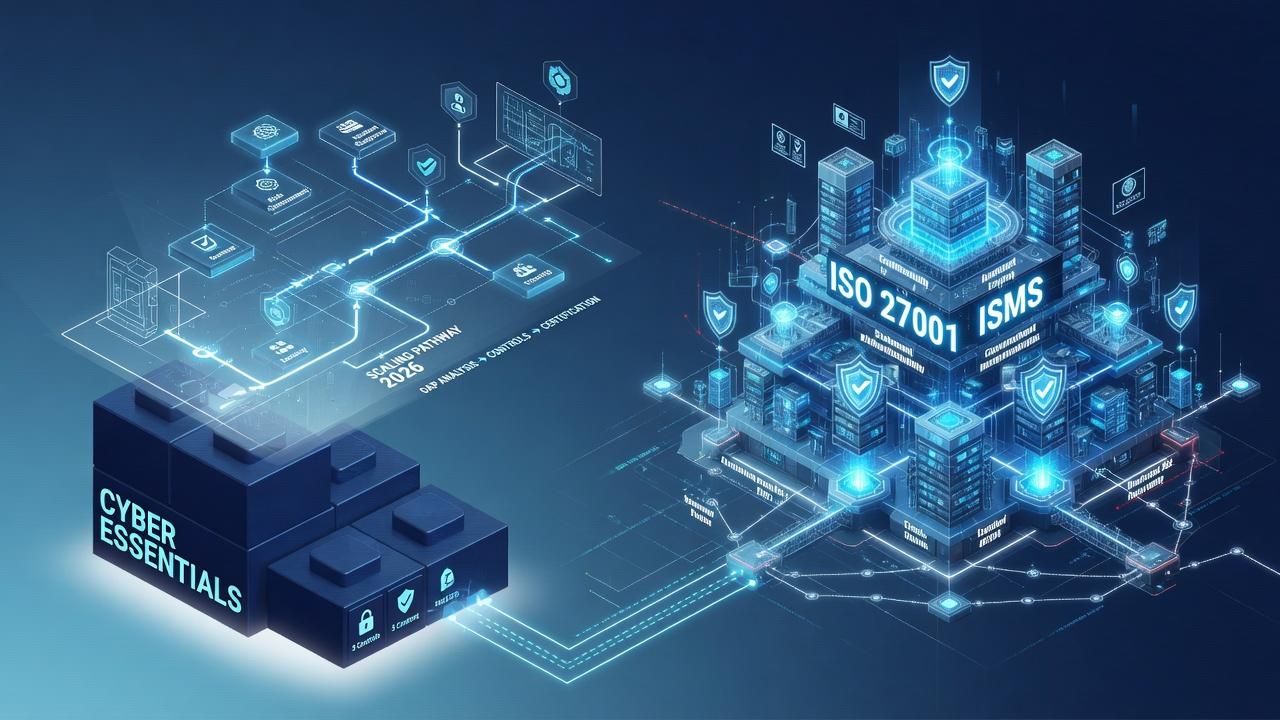
From Hygiene to Governance: How to Scale Cyber Essentials into a Full ISO 27001 ISMS in 2026
Discover how to scale Cyber Essentials into a full ISO 27001 ISMS in 2026. Reuse evidence, map controls, meet DORA & NIS2 rules and win enterprise contracts.

You Guide on how to Start Implementing NIST CSF in Your Organization
Master NIST CSF implementation in your organization with this detailed guide. Learn core functions, key steps, best practices, and tips for cybersecurity succes

Why applying the NIST CSF Standard is a Life-Saver!
Discover why NIST CSF 2.0 is a life-saver for organizations. This flexible framework's 6 functions—Govern, Identify, Protect, Detect, Respond, Recover—boost res
Run Maturity Assessments with GRADUM
Transform your compliance journey with our AI-powered assessment platform
Assess your organization's maturity across multiple standards and regulations including ISO 27001, DORA, NIS2, NIST, GDPR, and hundreds more. Get actionable insights and track your progress with collaborative, AI-powered evaluations.
Explore More Comparisons
See how CE Marking and PRINCE2 compare against other standards