
HITRUST CSF vs AS9100
HITRUST CSF
Certifiable framework harmonizing 60+ security standards
AS9100
Global QMS standard for aviation, space, defense industries
Quick Verdict
HITRUST CSF delivers certifiable cybersecurity assurance for healthcare and regulated sectors via maturity-scored assessments, while AS9100 ensures aerospace QMS excellence with product safety and configuration controls. Organizations adopt them for market access, risk reduction, and stakeholder trust.
HITRUST CSF
HITRUST Common Security Framework
Key Features
- Harmonizes 60+ frameworks for assess-once-report-many
- Risk-based tailoring via structured organizational factors
- Five-level maturity model evaluates control institutionalization
- MyCSF platform automates scoping evidence management
- Tiered certifications e1 i1 r2 match risk levels
AS9100
AS9100D: Quality Management Systems for Aerospace
Key Features
- Configuration management for product integrity
- Product safety planning across lifecycle
- Counterfeit parts prevention and detection
- Operational risk management in processes
- Enhanced supplier controls and traceability
Detailed Analysis
A comprehensive look at the specific requirements, scope, and impact of each standard.
HITRUST CSF Details
What It Is
HITRUST Common Security Framework (CSF) is a certifiable, threat-adaptive control framework harmonizing requirements from 60+ standards like HIPAA, NIST, ISO 27001, PCI DSS, and GDPR. It employs a risk-based approach with structured tailoring via organizational, system, and regulatory factors for scalable assurance.
Key Components
- 19 assessment domains and hierarchical taxonomy (14 categories, 49 objectives, ~156 specifications).
- Five-level maturity model: policy, procedure, implemented, measured, managed.
- Tiered products: e1 (44 controls), i1 (182 requirements), r2 (tailored, highest).
- MyCSF platform for scoping, evidence, and certification lifecycle.
Why Organizations Use It
- Consolidates compliance for "assess once, report many" efficiency.
- Provides trusted third-party assurance reducing audit fatigue.
- Enhances risk management, market access in healthcare/finance.
- Builds stakeholder trust via centralized HITRUST validation.
Implementation Overview
Multi-phase: scoping/gap analysis, remediation, validated assessment by authorized assessors. Suited for regulated industries; requires policies, evidence automation, inheritance for cloud. Certification valid 1-2 years with interims.
AS9100 Details
What It Is
AS9100D (AS9100:2016) is the international quality management system (QMS) certification standard for aviation, space, and defense organizations. It extends ISO 9001:2015 with over 100 aerospace-specific requirements, using a risk-based, process-oriented approach focused on safety, traceability, and supply chain integrity.
Key Components
- 10-clause Annex SL structure covering context, leadership, planning, support, operation, evaluation, improvement.
- Aerospace additions: configuration management, product safety (8.1.3), counterfeit parts prevention (8.1.4), operational risk, human factors, enhanced supplier controls.
- Built on PDCA cycle; requires third-party certification via IAQG-accredited audits.
Why Organizations Use It
- **Market accessOften mandated by OEMs/primes for supplier qualification.
- **Risk reductionPrevents safety incidents, defects, counterfeit risks.
- Improves delivery, cuts rework costs, boosts supplier performance.
- Enhances reputation via OASIS database visibility.
Implementation Overview
- Phased: gap analysis, process design, training, internal audits, Stage 1/2 certification.
- Applies to manufacturers, designers, MROs globally; 6-18 months typical.
- Involves documented processes, KPIs, continual improvement, annual surveillance.
Key Differences
| Aspect | HITRUST CSF | AS9100 |
|---|---|---|
| Scope | Information security, privacy, 19 domains | Aerospace QMS, product safety, operations |
| Industry | Healthcare, regulated sectors, industry-agnostic | Aviation, space, defense manufacturing |
| Nature | Certifiable security framework, voluntary | Certifiable QMS standard, voluntary |
| Testing | Maturity-scored validated assessments, MyCSF | Stage 1/2 audits, surveillance, recertification |
| Penalties | Loss of certification, no legal fines | Loss of certification, contract disqualification |
Scope
Industry
Nature
Testing
Penalties
Frequently Asked Questions
Common questions about HITRUST CSF and AS9100
HITRUST CSF FAQ
AS9100 FAQ
You Might also be Interested in These Articles...

Why the SEC Stepped In: The Investor-Driven Push for Cybersecurity Transparency
Discover why the SEC's 2023 cybersecurity rules treat cyber risks as material financial threats. Explore the 'stick and carrot' approach for standardized disclo

The SOC Maturity Roadmap: A 5-Step Blueprint for Scaling from Ad-Hoc to Optimized Operations
Unlock SOC excellence with our 5-step maturity roadmap. Compare SOC-CMM, NIST CSF, and CMMC frameworks to scale from ad-hoc to automated operations. Start your
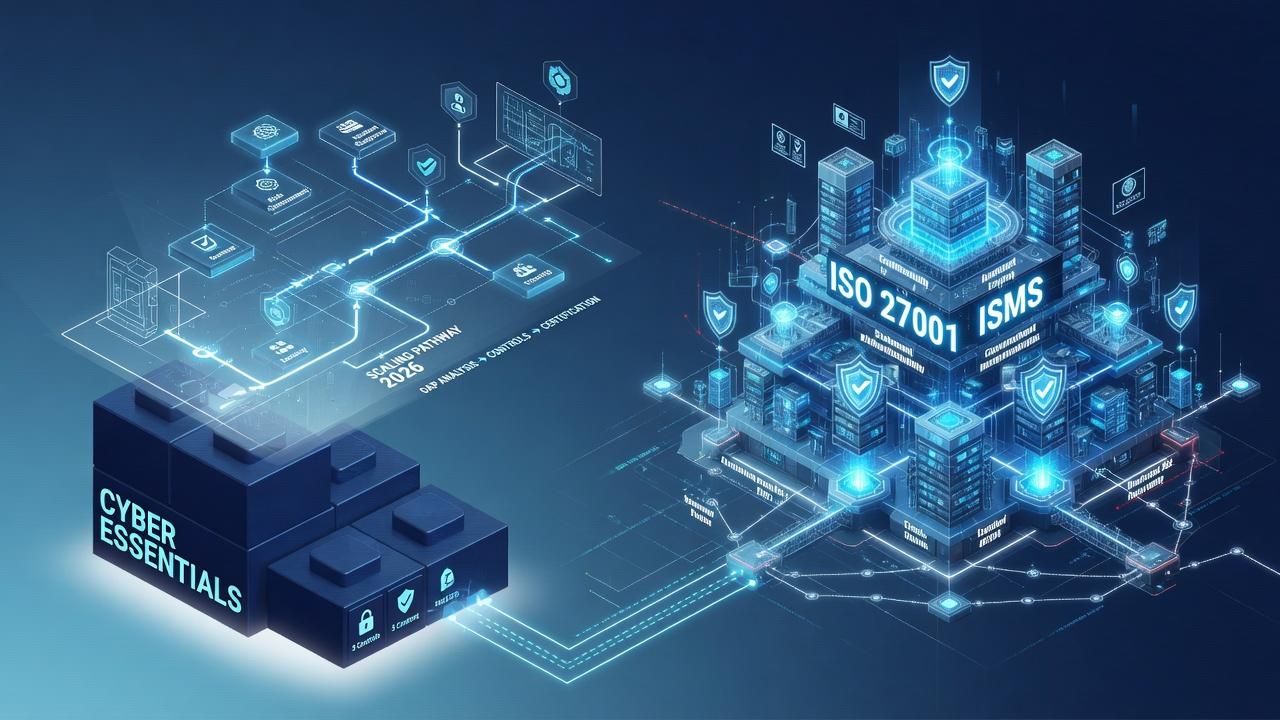
From Hygiene to Governance: How to Scale Cyber Essentials into a Full ISO 27001 ISMS in 2026
Discover how to scale Cyber Essentials into a full ISO 27001 ISMS in 2026. Reuse evidence, map controls, meet DORA & NIS2 rules and win enterprise contracts.
Run Maturity Assessments with GRADUM
Transform your compliance journey with our AI-powered assessment platform
Assess your organization's maturity across multiple standards and regulations including ISO 27001, DORA, NIS2, NIST, GDPR, and hundreds more. Get actionable insights and track your progress with collaborative, AI-powered evaluations.
Explore More Comparisons
See how HITRUST CSF and AS9100 compare against other standards