
IFS Food vs ISO 27701
IFS Food
GFSI-benchmarked standard for food safety and quality manufacturing
ISO 27701
International standard for privacy information management systems
Quick Verdict
IFS Food ensures food safety and quality for manufacturers via GFSI audits, while ISO 27701 certifies privacy management for PII handlers. Food firms adopt IFS for retailer access; privacy-focused orgs use 27701 for GDPR compliance and trust.
IFS Food
IFS Food Version 8
Key Features
- Product and Process Approach with risk-based sampling
- Minimum 50% audit time in production areas
- Ten Knock-Out requirements for critical controls
- Annual audits with unannounced every third cycle
- Risk-based HACCP and food defense integration
ISO 27701
ISO/IEC 27701 Privacy information management
Key Features
- Privacy Information Management System (PIMS) framework
- Controller and processor specific controls (Annex A/B)
- Risk-based privacy impact assessments (DPIAs)
- GDPR and regulatory mappings (Annex D)
- Integration with ISO 27001 ISMS
Detailed Analysis
A comprehensive look at the specific requirements, scope, and impact of each standard.
IFS Food Details
What It Is
IFS Food Version 8 is a GFSI-benchmarked certification standard for auditing food manufacturers' product and process compliance. It ensures safe, legal, authentic products meeting customer specifications via a risk-based Product and Process Approach (PPA).
Key Components
- Organized into governance, HACCP/PRPs, operational controls (e.g., allergens, fraud, defense), and performance monitoring.
- Over 200 checklist requirements with 10 Knock-Out (KO) critical items.
- Built on HACCP principles, prerequisite programs, and senior management accountability.
- Annual site-specific certification with scoring (Higher/Foundation levels).
Why Organizations Use It
- Meets European retailer demands for private-label supply.
- Reduces audit duplication, enhances market access.
- Mitigates recalls, fraud risks; builds trust.
- Drives continuous improvement via scoring and unannounced audits.
Implementation Overview
- Phased gap analysis, HACCP validation, training, internal audits.
- Involves documentation, on-site verification, supplier controls.
- Applies to food processors globally; requires accredited body audits.
ISO 27701 Details
What It Is
ISO/IEC 27701 is an international standard establishing requirements for a Privacy Information Management System (PIMS). It provides a framework for PII controllers and processors to manage privacy risks through the full PII lifecycle. Adopting a risk-based PDCA (Plan-Do-Check-Act) approach, it aligns with ISO/IEC 27001:2022 while adding privacy-specific guidance.
Key Components
- Clauses 4–10 extend management system requirements for privacy governance.
- Annex A (controllers) and Annex B (processors) detail ~50 privacy controls on consent, data subject rights, transfers, and vendor management.
- Built on ISO 27001/27002; includes GDPR mappings (Annex D).
- Certification via accredited bodies with 3-year cycles and surveillance audits.
Why Organizations Use It
- Demonstrates accountability for GDPR, CCPA compliance; reduces fines and breach risks.
- Enhances trust, procurement edge, insurance premiums.
- Harmonizes multi-jurisdictional privacy efforts.
Implementation Overview
- Phased: scope, gap analysis, controls, audits (6-12 months typical).
- Applies to all PII-handling orgs; integrates with ISMS.
- Requires PII inventory, DPIAs, training, vendor contracts.
Key Differences
| Aspect | IFS Food | ISO 27701 |
|---|---|---|
| Scope | Food safety, quality, process compliance in manufacturing | Privacy management system for PII processing lifecycle |
| Industry | Food manufacturers, packagers globally, especially Europe | Any sector handling PII, global applicability |
| Nature | GFSI-benchmarked voluntary certification standard | Voluntary ISO management system certification |
| Testing | Annual on-site product/process audits, traceability tests | Stage 1/2 audits, annual surveillance, 3-year recertification |
| Penalties | Certification loss, no legal fines | Certification withdrawal, no direct legal penalties |
Scope
Industry
Nature
Testing
Penalties
Frequently Asked Questions
Common questions about IFS Food and ISO 27701
IFS Food FAQ
ISO 27701 FAQ
You Might also be Interested in These Articles...

CMMC Level 3 Implementation Guide: Integrating NIST SP 800-172 Enhanced Controls for APT Defense
Step-by-step CMMC Level 3 guide for DIB contractors. Implement 24 NIST SP 800-172 controls on Level 2. Prep for DIBCAC, C3PAO scoping & 180-day POA&Ms. Boost cy
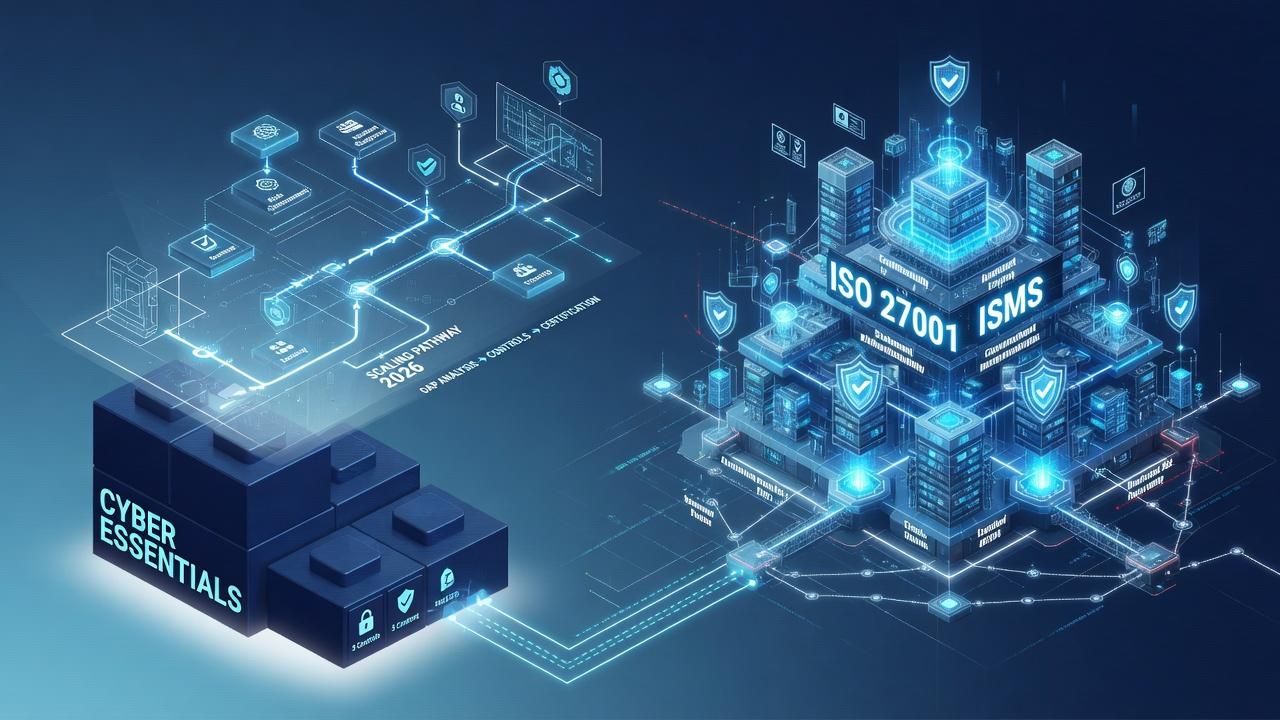
From Hygiene to Governance: How to Scale Cyber Essentials into a Full ISO 27001 ISMS in 2026
Discover how to scale Cyber Essentials into a full ISO 27001 ISMS in 2026. Reuse evidence, map controls, meet DORA & NIS2 rules and win enterprise contracts.

The Reasons Why NIS2 is Fundamental for Cyber Resilience in Europe
Uncover why NIS2 transcends compliance burdens, delivering real cyber resilience value through enforced measurements and activities. Explore insights via our pa
Run Maturity Assessments with GRADUM
Transform your compliance journey with our AI-powered assessment platform
Assess your organization's maturity across multiple standards and regulations including ISO 27001, DORA, NIS2, NIST, GDPR, and hundreds more. Get actionable insights and track your progress with collaborative, AI-powered evaluations.
Explore More Comparisons
See how IFS Food and ISO 27701 compare against other standards