
NIS2 vs ISO 45001
NIS2
EU directive for cybersecurity resilience in critical sectors
ISO 45001
International standard for occupational health and safety management systems
Quick Verdict
NIS2 mandates cybersecurity resilience for EU critical sectors via risk management and reporting, while ISO 45001 provides voluntary OH&S framework for global workplaces emphasizing leadership and continual improvement. Companies adopt NIS2 for regulatory compliance, ISO 45001 for safety culture and certification.
NIS2
Directive (EU) 2022/2555 (NIS2 Directive)
Key Features
- Size-cap rule covers medium/large entities in expanded sectors
- Strict 24-hour early warning incident reporting mandated
- Senior management held directly accountable for compliance
- Fines up to 2% global annual turnover imposed
- Continuous risk management includes supply chain security
ISO 45001
ISO 45001:2018 Occupational Health and Safety Management Systems
Key Features
- Top management leadership and accountability
- Worker consultation and participation requirements
- Hierarchy of controls for risk management
- Annex SL for IMS integration
- Contractor and change management controls
Detailed Analysis
A comprehensive look at the specific requirements, scope, and impact of each standard.
NIS2 Details
What It Is
NIS2 Directive (EU) 2022/2555 is an EU regulation expanding the original NIS Directive to achieve a high common level of cybersecurity across member states. It targets essential and important entities via a size-cap rule (50+ employees or €10M turnover for important; higher for essential) in broadened sectors like energy, transport, health, digital infrastructure, postal, waste, and food.
Key Components
- **Risk managementOngoing assessments, supply chain security, access controls, encryption.
- **Incident reporting24-hour early warning, 72-hour notification, 1-month final report to CSIRTs.
- **Corporate accountabilitySenior management direct responsibility.
- **Business continuityRecovery plans and resilience measures. Built on standards like ISO 27001, NIST CSF; enforced via national laws post-October 2024 transposition, with spot checks.
Why Organizations Use It
- Avoids fines up to €10M or 2% global turnover.
- Strengthens resilience against threats like APTs, ransomware.
- Ensures compliance in multi-state operations.
- Boosts trust, continuity, competitive edge.
Implementation Overview
- Scope check by size/sector.
- Deploy risk frameworks, reporting, training.
- Targets EU medium/large entities in covered sectors.
- Continuous audits, no central certification; leverage existing ISMS. (178 words)
ISO 45001 Details
What It Is
ISO 45001:2018 is the international standard for Occupational Health and Safety Management Systems (OHSMS). It specifies requirements to enable organizations to improve OH&S performance, prevent work-related injury and ill health, and provide safe workplaces. Employing a risk-based approach, High-Level Structure (Annex SL), and PDCA cycle, it aligns with ISO 9001 and 14001.
Key Components
- Clauses 4–10: context, leadership and worker participation, planning, support, operation, performance evaluation, improvement.
- Hierarchy of controls, hazard identification, contractor management, emergency preparedness.
- Leadership accountability and continual improvement principles.
- Voluntary third-party certification.
Why Organizations Use It
- Prevents incidents, ensures legal compliance, reduces risks and costs.
- Builds resilience, enhances reputation, integrates with IMS.
- Meets stakeholder demands, improves culture and productivity.
Implementation Overview
- Phased: gap analysis, policy/objectives, training, controls, audits.
- Applicable to all sizes/sectors globally; 6-12 months typical.
Key Differences
| Aspect | NIS2 | ISO 45001 |
|---|---|---|
| Scope | Cybersecurity for critical infrastructure and digital services | Occupational health and safety management systems |
| Industry | Essential sectors like energy, transport, EU-focused | All industries worldwide, scalable to any size |
| Nature | Mandatory EU regulation with enforcement | Voluntary international certification standard |
| Testing | Incident reporting and spot checks by authorities | Internal audits and management reviews |
| Penalties | Fines up to 2% global turnover | Loss of certification, no legal fines |
Scope
Industry
Nature
Testing
Penalties
Frequently Asked Questions
Common questions about NIS2 and ISO 45001
NIS2 FAQ
ISO 45001 FAQ
You Might also be Interested in These Articles...
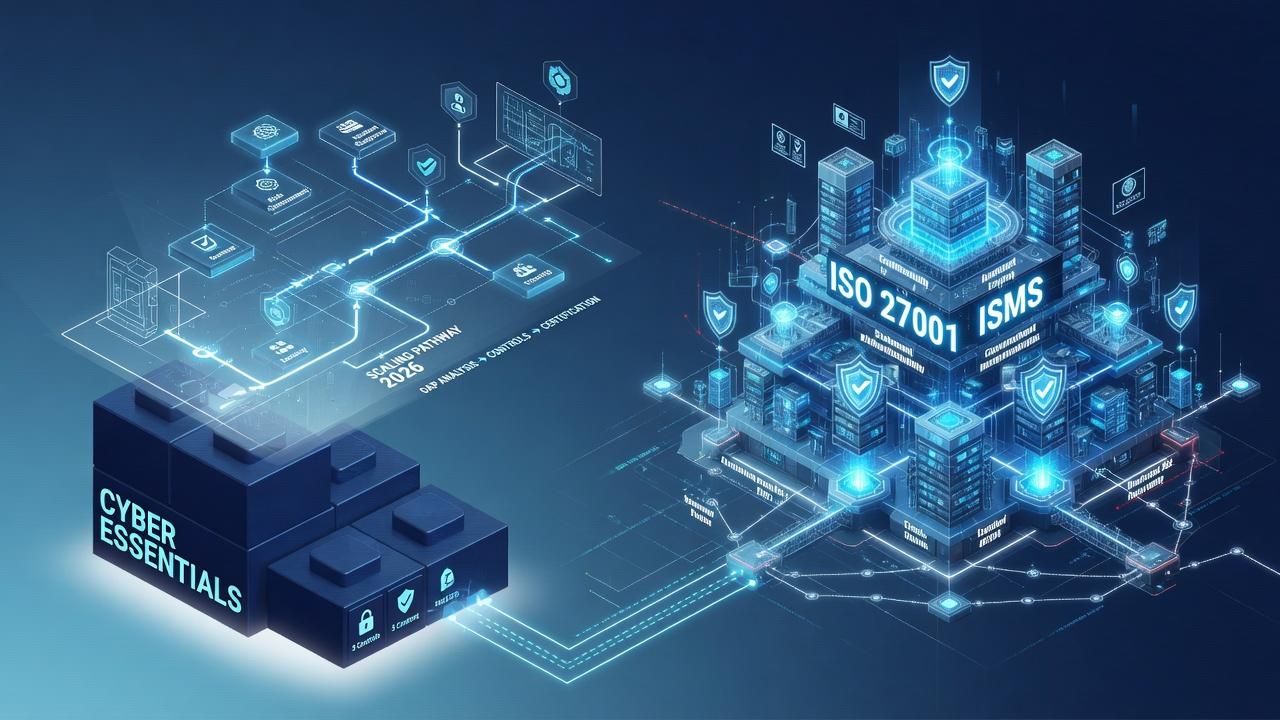
From Hygiene to Governance: How to Scale Cyber Essentials into a Full ISO 27001 ISMS in 2026
Discover how to scale Cyber Essentials into a full ISO 27001 ISMS in 2026. Reuse evidence, map controls, meet DORA & NIS2 rules and win enterprise contracts.

The Panoramic View: How Integrated Compliance Monitoring Creates Unprecedented Organizational Visibility and Adaptability
Gain unprecedented organizational visibility with integrated compliance monitoring. Automate real-time alerts, ensure GDPR & SOC 2 adherence, reduce risks, and

Beyond the Boardroom: 5 Ways Modern Compliance Software Elevates Every Department
Discover 5 ways modern compliance software boosts HR, IT, finance & more: automate risks, enhance efficiency, ensure data integrity, stay audit-ready. Elevate y
Run Maturity Assessments with GRADUM
Transform your compliance journey with our AI-powered assessment platform
Assess your organization's maturity across multiple standards and regulations including ISO 27001, DORA, NIS2, NIST, GDPR, and hundreds more. Get actionable insights and track your progress with collaborative, AI-powered evaluations.
Explore More Comparisons
See how NIS2 and ISO 45001 compare against other standards