
OSHA vs ISO/IEC 42001:2023
OSHA
US federal regulation for workplace safety standards
ISO/IEC 42001:2023
International standard for AI management systems
Quick Verdict
OSHA enforces mandatory workplace safety via inspections and fines for US employers, while ISO/IEC 42001:2023 offers voluntary AI governance certification globally. Companies adopt OSHA for legal compliance; ISO 42001 for ethical AI trust and market differentiation.
OSHA
Occupational Safety and Health Act of 1970
Key Features
- Enforces 29 CFR 1910 standards for general industry
- General Duty Clause covers recognized serious hazards
- Hierarchy of controls prioritizes engineering over PPE
- Risk-based inspections target high-hazard workplaces
- Mandates electronic injury/illness reporting via ITA
ISO/IEC 42001:2023
ISO/IEC 42001:2023 AI Management Systems
Key Features
- PDCA-based framework for AIMS governance
- Mandatory AI Impact Assessments for high-risk AI
- 39 AI-specific controls in Annex A
- Full AI lifecycle management controls
- Integrates with ISO 27001 and HLS standards
Detailed Analysis
A comprehensive look at the specific requirements, scope, and impact of each standard.
OSHA Details
What It Is
Occupational Safety and Health Administration (OSHA), established by the Occupational Safety and Health Act of 1970, is a US federal regulation enforcing workplace safety and health standards. Its primary purpose is assuring safe conditions via 29 CFR 1910 (general industry) and others, using a performance-based, risk-hierarchy approach including the General Duty Clause.
Key Components
- Subparts covering walking surfaces, PPE, HazCom, LOTO, toxic substances.
- **Hierarchy of controlselimination, substitution, engineering, administrative, PPE.
- Recordkeeping (Forms 300/300A/301), inspections, penalties up to $165k.
- No certification; enforced via compliance and state plans.
Why Organizations Use It
- Legal mandate for US employers affecting interstate commerce.
- Reduces injuries, penalties, insurance costs; enhances productivity, reputation.
- Mitigates risks via proactive IIPPs; builds stakeholder trust.
Implementation Overview
- Phased: gap analysis, written programs, training, audits.
- Applies to most private-sector employers; scalable by size/industry.
- Ongoing enforcement, no formal certification.
ISO/IEC 42001:2023 Details
What It Is
ISO/IEC 42001:2023 is the world's first international standard for Artificial Intelligence Management Systems (AIMS), specifying requirements to establish, implement, maintain, and improve responsible AI governance. Applicable to any organization—developers, providers, users—it addresses AI lifecycle risks like bias and transparency using Plan-Do-Check-Act (PDCA) methodology and High-Level Structure (HLS) for ISO compatibility.
Key Components
- Clauses 4-10 cover context, leadership, planning, support, operations, evaluation, improvement.
- **Annex A 39 AI-specific controls for data, transparency, integrity, resiliency.
- Mandatory AI Impact Assessments (AIIAs) for high-risk systems.
- Third-party certification model with audits.
Why Organizations Use It
- Mitigates ethical, legal, societal AI risks.
- Aligns with EU AI Act, NIST; builds stakeholder trust.
- Drives innovation, compliance, competitive differentiation.
- Enhances reputation via early adopters like Microsoft Copilot.
Implementation Overview
- Phased gap analysis, policy development, risk assessments, training.
- 6-12 months typical; faster (4-6) with ISO 27001 integration.
- Universal applicability; requires leadership commitment, tools like ISMS.online.
Key Differences
| Aspect | OSHA | ISO/IEC 42001:2023 |
|---|---|---|
| Scope | Workplace safety, health hazards, recordkeeping | AI management systems, lifecycle risks, ethics |
| Industry | All US industries, general/construction/agriculture | All sectors globally, AI developers/users/providers |
| Nature | Mandatory US regulations, enforced by inspections | Voluntary international certification standard |
| Testing | Compliance inspections, injury data reviews | Third-party audits, AI impact assessments |
| Penalties | Civil fines up to $165k, failure-to-abate daily | No legal penalties, loss of certification |
Scope
Industry
Nature
Testing
Penalties
Frequently Asked Questions
Common questions about OSHA and ISO/IEC 42001:2023
OSHA FAQ
ISO/IEC 42001:2023 FAQ
You Might also be Interested in These Articles...

NIST CSF 2.0 Supply Chain Risk Management: Complete Playbook with Profiles, Tiers, and Vendor Assessment Templates
Master NIST CSF 2.0 ID.SC supply chain risk management with vendor assessment templates, profile gap analysis, and tier strategies. Mitigate third-party threats

Top 10 Reasons CMMC Level 3 Certification Unlocks Competitive Edge for Primes Handling Critical DoD Programs
Discover top 10 reasons CMMC Level 3 certification unlocks competitive edge for DoD primes. Reduced APT risks, procurement prefs, NIST 800-172 compliance via v2
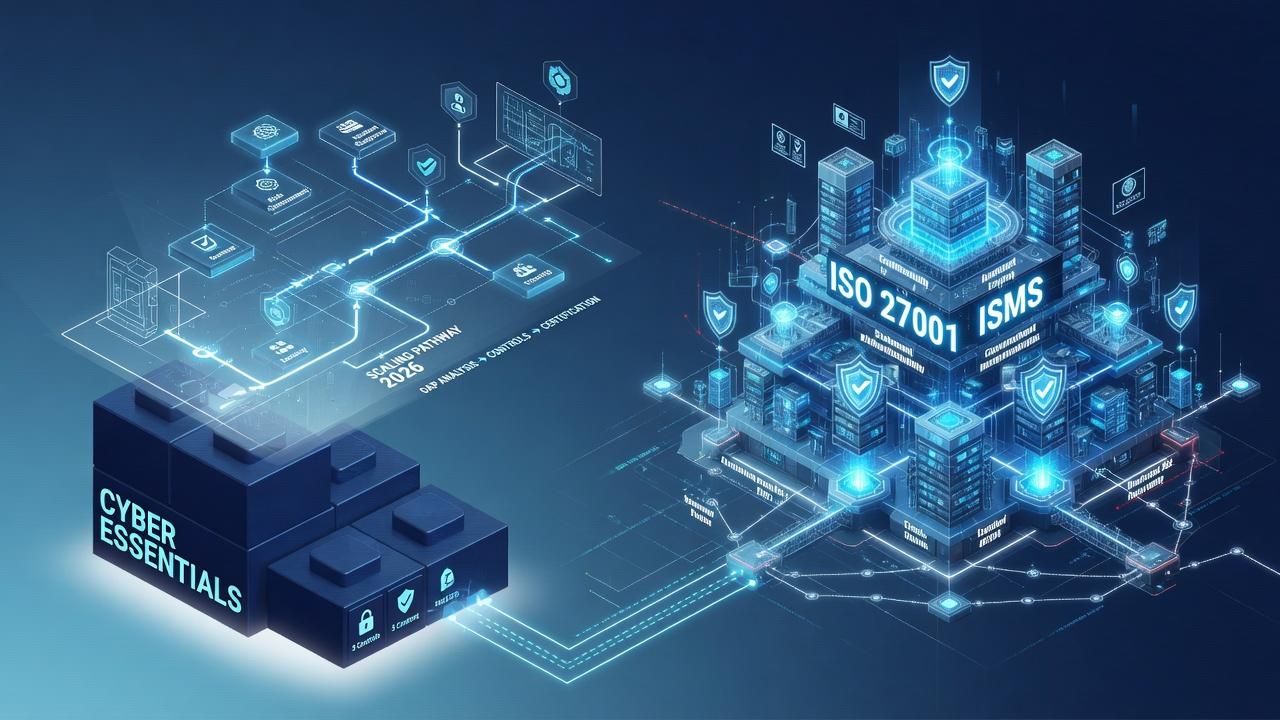
From Hygiene to Governance: How to Scale Cyber Essentials into a Full ISO 27001 ISMS in 2026
Discover how to scale Cyber Essentials into a full ISO 27001 ISMS in 2026. Reuse evidence, map controls, meet DORA & NIS2 rules and win enterprise contracts.
Run Maturity Assessments with GRADUM
Transform your compliance journey with our AI-powered assessment platform
Assess your organization's maturity across multiple standards and regulations including ISO 27001, DORA, NIS2, NIST, GDPR, and hundreds more. Get actionable insights and track your progress with collaborative, AI-powered evaluations.
Explore More Comparisons
See how OSHA and ISO/IEC 42001:2023 compare against other standards