
SAFe vs NIST 800-171
SAFe
Enterprise framework scaling Lean-Agile for Business Agility
NIST 800-171
U.S. standard for protecting CUI in nonfederal systems.
Quick Verdict
SAFe scales Agile for enterprise software delivery and business agility, while NIST 800-171 mandates CUI protection in nonfederal systems via DFARS contracts. Companies adopt SAFe for faster time-to-market; NIST 800-171 for federal compliance and contract eligibility.
SAFe
Scaled Agile Framework (SAFe) 6.0
Key Features
- Agile Release Trains synchronize 50-125 people across teams
- Program Increments enable 8-12 week predictable value delivery
- 10 immutable Lean-Agile principles guide economic decision-making
- Seven core competencies drive enterprise Business Agility
- Scalable configurations from Essential to Full SAFe
NIST 800-171
NIST SP 800-171 Protecting CUI in Nonfederal Systems
Key Features
- Protects CUI confidentiality in nonfederal systems
- 97 requirements across 17 control families (r3)
- SSP and POA&M for implementation documentation
- Scoped enclave boundaries for cost efficiency
- FedRAMP Moderate equivalence for cloud services
Detailed Analysis
A comprehensive look at the specific requirements, scope, and impact of each standard.
SAFe Details
What It Is
Scaled Agile Framework (SAFe) 6.0 is a comprehensive framework for scaling Lean-Agile practices across enterprises. It integrates Agile, Lean, and systems thinking to achieve Business Agility, focusing on aligning strategy, execution, and operations in large-scale software and IT environments through structured workflows and roles.
Key Components
- Agile Release Trains (ARTs) 50-125 people delivering value in Program Increments (PIs).
- 10 Lean-Agile Principles Immutable foundation like economic view and value flow.
- 7 Core Competencies Including Lean-Agile Leadership, Team Agility, and Continuous Learning Culture.
- 4 Configurations Essential, Large Solution, Portfolio, Full SAFe. No formal certification required, but SAFe Agilist and RTE trainings support adoption.
Why Organizations Use It
Drives faster time-to-market (20-50%), productivity gains (30-75%), and quality improvements. Enables compliance in regulated industries via embedded governance. Reduces risks through alignment and flow metrics, boosting employee engagement and competitive edge in digital transformation.
Implementation Overview
Follow phased Implementation Roadmap value stream mapping, leadership training, ART launches. Applies to large enterprises in software/IT; tools like Jira Align aid. Involves PI Planning, Inspect & Adapt; tailored for hybrid/distributed teams.
NIST 800-171 Details
What It Is
NIST SP 800-171 (Protecting Controlled Unclassified Information in Nonfederal Systems and Organizations) is a U.S. federal framework providing security requirements for safeguarding Controlled Unclassified Information (CUI) confidentiality. It applies to nonfederal systems processing, storing, or transmitting CUI, using a control-based approach tailored from NIST SP 800-53 Moderate baseline.
Key Components
- 17 families in Rev. 3 (e.g., Access Control, Audit, Supply Chain Risk Management), with ~97-110 requirements.
- Core artifacts: System Security Plan (SSP) and Plan of Action and Milestones (POA&M).
- Built on FIPS 200; companion SP 800-171A for assessments via examine/interview/test.
- Compliance via self-assessment or third-party (e.g., CMMC Level 2).
Why Organizations Use It
- Mandatory for federal contractors via DFARS 252.204-7012.
- Reduces breach risk, ensures contract eligibility, builds supply chain trust.
- Enhances cybersecurity maturity, competitive edge in DoD procurement.
Implementation Overview
- Phased: scoping, gap analysis, controls, evidence, monitoring.
- Applies to contractors handling CUI; suits all sizes with enclave scoping.
- Audits via SPRS scoring; Rev. 3 released in May 2024 and remains current in 2026.
Key Differences
| Aspect | SAFe | NIST 800-171 |
|---|---|---|
| Scope | Scaling Agile for enterprise software/IT delivery | Protecting CUI confidentiality in nonfederal systems |
| Industry | Software, IT ops, regulated sectors like finance/healthcare | Defense contractors, federal supply chain, DoD-focused |
| Nature | Voluntary framework with certifications | Mandatory via federal contracts like DFARS |
| Testing | PI Planning, Inspect & Adapt workshops, self-assessments | SPRS scoring, CMMC audits, examine/interview/test |
| Penalties | No legal penalties, implementation failure risks | Contract ineligibility, fines, debarment |
Scope
Industry
Nature
Testing
Penalties
Frequently Asked Questions
Common questions about SAFe and NIST 800-171
SAFe FAQ
NIST 800-171 FAQ
You Might also be Interested in These Articles...

TISAX Tabletop Exercises for ADAS Suppliers: Simulating Prototype IP Leaks and Ransomware in Hybrid Supply Chains (2025 Edition with Hero Scenario Visual)
Master TISAX 'Very High' tabletop exercises for ADAS suppliers with 2024 breach simulations like CAD leaks and ransomware. Get scripts, AAR templates, hybrid ti

CIS Controls v8.1, Operationalized: Top 10 Reasons Compliance Monitoring Software Accelerates Real-World Implementation
Operationalize CIS Controls v8.1 with compliance monitoring software. Turn checklists into dashboards, tickets, and audit-proof workflows. Top 10 reasons it acc
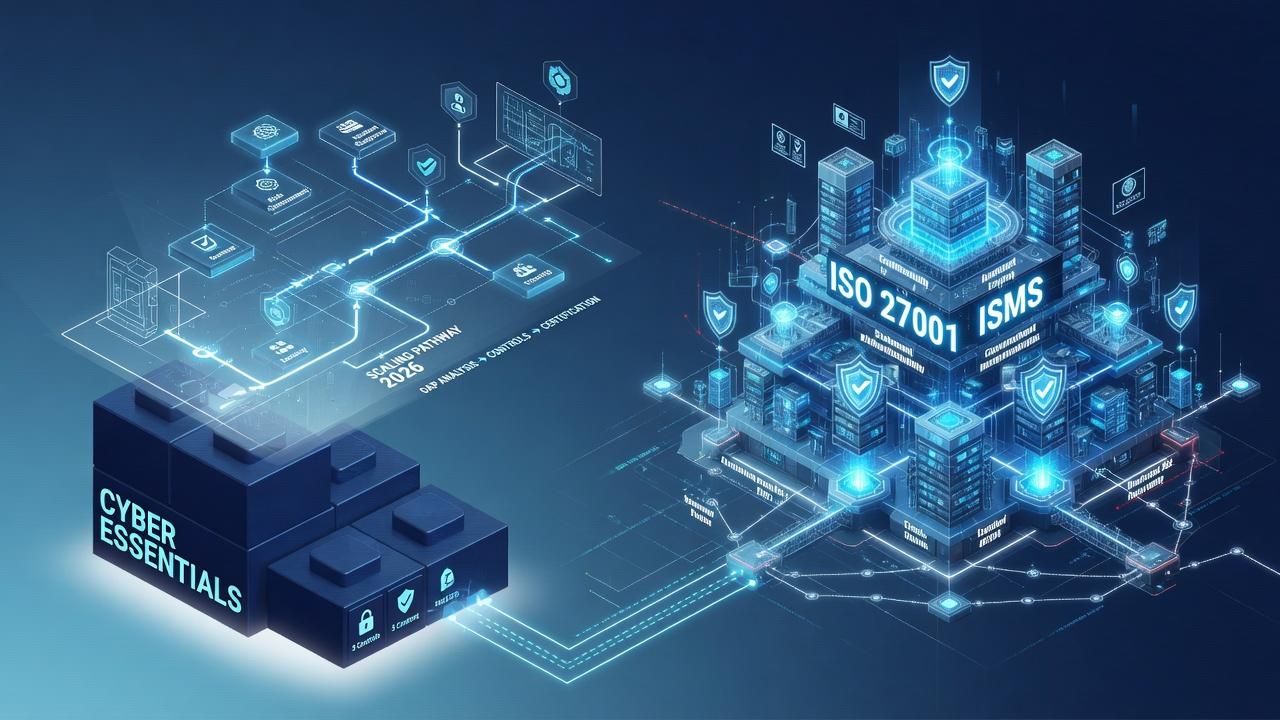
From Hygiene to Governance: How to Scale Cyber Essentials into a Full ISO 27001 ISMS in 2026
Discover how to scale Cyber Essentials into a full ISO 27001 ISMS in 2026. Reuse evidence, map controls, meet DORA & NIS2 rules and win enterprise contracts.
Run Maturity Assessments with GRADUM
Transform your compliance journey with our AI-powered assessment platform
Assess your organization's maturity across multiple standards and regulations including ISO 27001, DORA, NIS2, NIST, GDPR, and hundreds more. Get actionable insights and track your progress with collaborative, AI-powered evaluations.
Explore More Comparisons
See how SAFe and NIST 800-171 compare against other standards