
ISO/IEC 42001:2023 vs ISO 27018
ISO/IEC 42001:2023
International standard for AI management systems
ISO 27018
International code of practice for PII protection in public clouds.
Quick Verdict
ISO/IEC 42001:2023 governs AI systems responsibly across lifecycles for all organizations, while ISO 27018 extends ISO 27001 for PII privacy in public clouds. Companies adopt 42001 for ethical AI trust and 27018 for cloud processor compliance and procurement edge.
ISO/IEC 42001:2023
ISO/IEC 42001:2023 Artificial Intelligence Management System
ISO 27018
ISO/IEC 27018:2019 PII protection in public clouds
Key Features
- Requires transparent subprocessor disclosure
- Prohibits PII use for marketing without consent
- Mandates breach notification to customers
- Enforces data minimization and retention limits
- Supports controller data subject rights
Detailed Analysis
A comprehensive look at the specific requirements, scope, and impact of each standard.
ISO/IEC 42001:2023 Details
What It Is
ISO/IEC 42001:2023 is the world's first international standard for establishing, implementing, maintaining, and improving an Artificial Intelligence Management System (AIMS). It provides a PDCA-based framework with High-Level Structure (HLS) to manage AI risks and opportunities responsibly across the full lifecycle, applicable to any organization regardless of size or AI role.
Key Components
- Clauses 4-10 covering context, leadership, planning, support, operation, evaluation, and improvement.
- Annex A with 39 AI-specific controls for risks like bias, transparency, and integrity.
- Built on ISO management systems; supports certification via third-party audits.
Why Organizations Use It
- Mitigates AI risks (bias, drift, ethics) while enabling innovation.
- Aligns with regulations like EU AI Act; integrates with ISO 27001/9001.
- Builds trust, enhances reputation, accelerates procurement, reduces insurance costs.
Implementation Overview
- Phased gap analysis, AIIAs, training, and monitoring.
- 6-12 months typical; leverages tools like ISMS.online.
- Universal applicability; certification valid 3 years with surveillance audits.
ISO 27018 Details
What It Is
ISO/IEC 27018:2019 is an international code of practice extending ISO/IEC 27001 and ISO/IEC 27002 for protecting personally identifiable information (PII) in public clouds where providers act as PII processors. It employs a risk-based approach to tackle cloud-specific issues like multi-tenancy, subprocessors, and cross-border transfers.
Key Components
- Privacy principles: consent/choice, purpose limitation, data minimization, accuracy, limited retention/disclosure, security, transparency, accountability.
- ~25–30 additional controls mapped to ISO 27001 Annex A domains.
- Integrated into ISMS; assessed via ISO 27001 audits, no standalone certification.
Why Organizations Use It
Drives customer trust, accelerates procurement with Statement of Applicability, aligns with GDPR Article 28 and HIPAA, mitigates privacy risks, enables competitive differentiation, and supports favorable insurance terms.
Implementation Overview
Requires existing ISO 27001; involves gap analysis, control integration, policy/contract updates, staff training. Suits CSPs of all sizes; features third-party audits with annual surveillance. (178 words)
Key Differences
| Aspect | ISO/IEC 42001:2023 | ISO 27018 |
|---|---|---|
| Scope | AI management systems across lifecycle | PII protection in public cloud processing |
| Industry | All sectors, AI developers/providers/users globally | Cloud service providers handling PII worldwide |
| Nature | Voluntary certifiable management system standard | Code of practice extending ISO 27001 voluntarily |
| Testing | Third-party audits, AIIAs, continual monitoring | ISO 27001 audits assess additional privacy controls |
| Penalties | Loss of certification, no legal penalties | Loss of certification, no legal penalties |
Scope
Industry
Nature
Testing
Penalties
Frequently Asked Questions
Common questions about ISO/IEC 42001:2023 and ISO 27018
ISO/IEC 42001:2023 FAQ
ISO 27018 FAQ
You Might also be Interested in These Articles...

CMMC Scoping Mastery for Defense Supply Chains: Enclave Mapping, Subcontractor Flow-Down, and CUI Inventory Blueprint
Master CMMC scoping for DIB: delineate FCI/CUI boundaries, segment enclaves, manage subcontractor flow-down. Prevent 80% assessment failures with SSP templates,
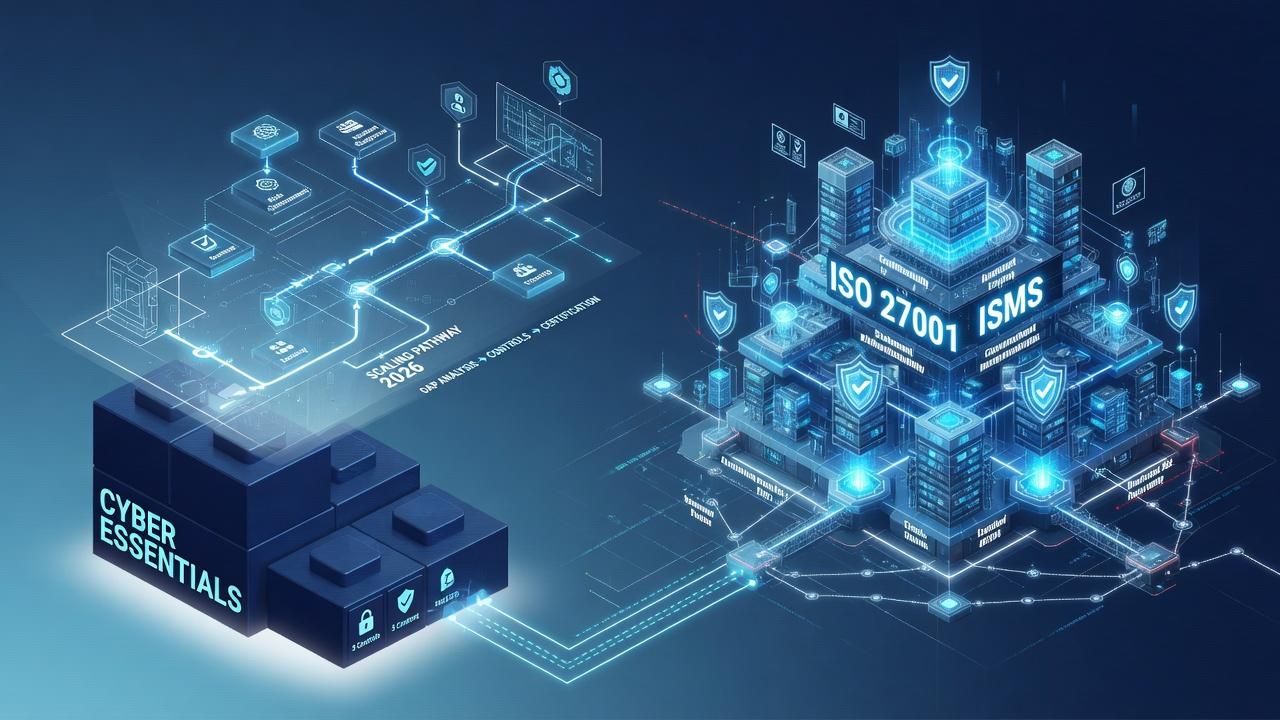
From Hygiene to Governance: How to Scale Cyber Essentials into a Full ISO 27001 ISMS in 2026
Discover how to scale Cyber Essentials into a full ISO 27001 ISMS in 2026. Reuse evidence, map controls, meet DORA & NIS2 rules and win enterprise contracts.

Singapore PDPA Implementation Guide: Mastering Part 6A Breach Notification Thresholds and Timelines from Primary Statute
Master Singapore PDPA Part 6A breach notifications: statutory thresholds (risk of significant harm), 72-hour timelines, checklists, templates & frameworks. Comp
Run Maturity Assessments with GRADUM
Transform your compliance journey with our AI-powered assessment platform
Assess your organization's maturity across multiple standards and regulations including ISO 27001, DORA, NIS2, NIST, GDPR, and hundreds more. Get actionable insights and track your progress with collaborative, AI-powered evaluations.
Explore More Comparisons
See how ISO/IEC 42001:2023 and ISO 27018 compare against other standards